Blog
Meeting People Where They Are: Audio Storytelling and Mental Health
By Naomi Grewan
Senior Communicator Fellow, Stavros Niarchos Foundation (SNF) Global Center for Child and Adolescent Mental Health at the Child Mind Institute
Picture this — it’s the middle of June and you’re in South Africa, huddled around a gas heater because at this time of year, it’s freezing. You’re with three other people, two of which you don’t know very well. And you’re about to ask them to do something kind of weird. You’re going to ask them to listen to a podcast episode. So, you open your laptop, take a deep breath, and press play.
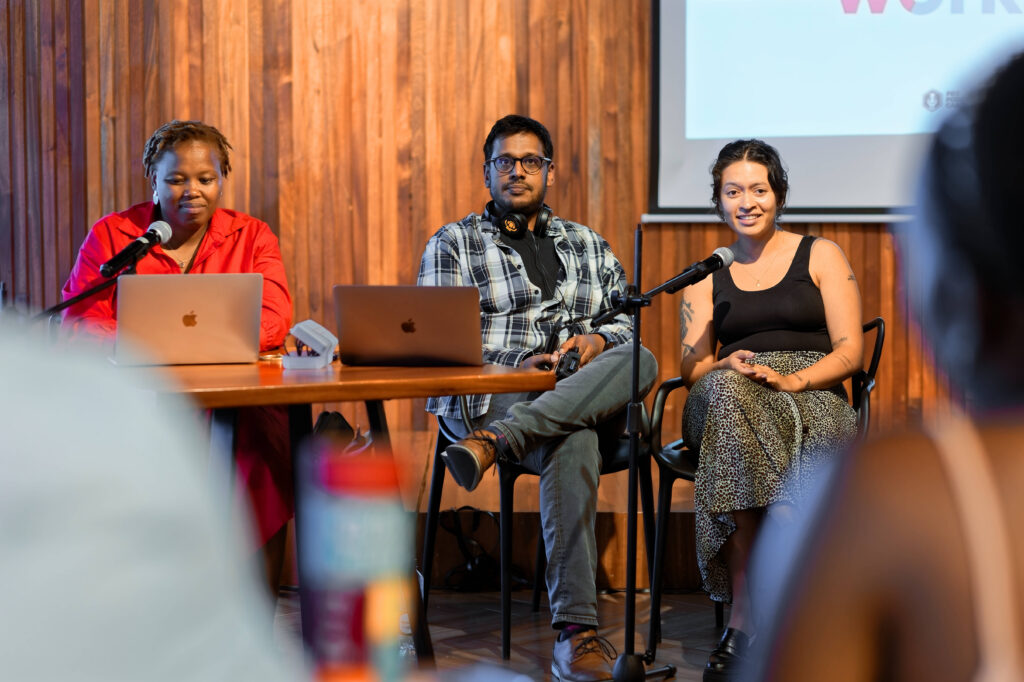
Image credit: Naomi Grewan
That’s the situation I found myself in earlier this year alongside the 2025 cohort of Global Communicator Fellows with the Stavros Niarchos Foundation (SNF) Global Center for Child and Adolescent Mental Health at the Child Mind Institute. Mary-Ann Nobele, another senior fellow, and I had put together a three-day reporter training for the junior fellows we’d been mentoring. We’re currently working with our mentees Sikelela Rollom and Curtis Mkhize to produce two audio stories about child and adolescent mental health.
We all live in different parts of the country. So in June, we came together for a few days to connect and put into practice some of what we’d been discussing virtually. Each day, we started our sessions with listening to podcasts. Because, as Radio Workshop’s editor Lesedi Mogoatlhe always says, the best way to learn how to make good audio stories is to listen to good audio stories.
It’s been almost four months since that cold week in June, but we left feeling warmed by the experience. Since then, our virtual sessions have continued and Curtis and Sikelela’s stories are taking shape.
While that happens, there’s a question I’ve been trying to answer. What role does storytelling play in raising mental health awareness? This has led me to an even broader question. Why use storytelling at all?
Luckily, the answer came instinctively. Stories are something we’re all familiar with. Across continents and cultures, storytelling is a constant. It’s a way to explain our experiences and connect to others. It builds trust and empathy. And for children, it can be a way to learn about good and bad or right and wrong.
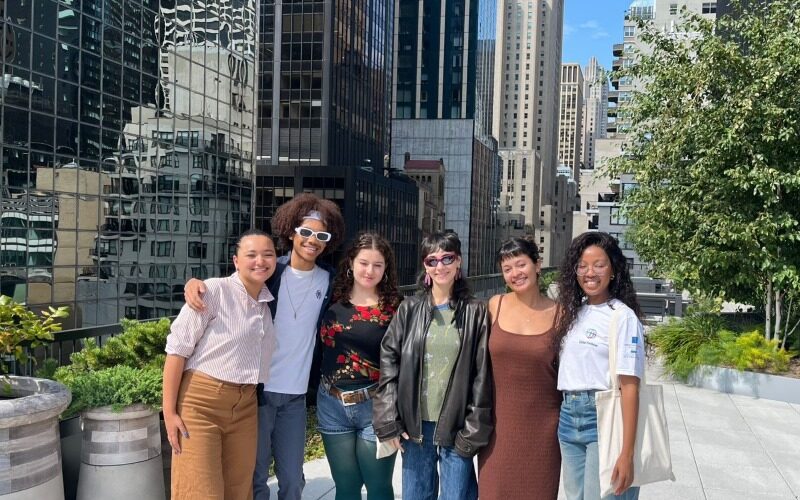
Image credit: Naomi Grewan
Storytelling has been around longer than any of us reading this blog have been alive. It’ll likely outlive all of us too. I can say that confidently, because there’s nothing that connects us, holds us, and guides us like stories do.
With that in mind, it only makes sense that mental health storytelling serves the same purpose. When you hear someone’s story, it humanizes the mental health struggle in a way some articles and research papers rarely can. In humanizing mental health challenges, we can destigmatize and normalize them. Doing so hopefully encourages those struggling to talk about it openly and seek support.
In the process of producing these audio stories, we’ve seen how having open conversations about mental health has helped us speak up about our own challenges. I shared with the group my experience with therapy, another fellow shared their struggle with grief, and one reached out to seek professional help after realizing there’s no shame in admitting they need it. If we want to drive connection, we need to lean into vulnerability.
But while this answers the storytelling question, there’s also the question of medium. If we wanted to, we could turn these stories into articles, or make videos to post on visual platforms like TikTok. So why audio?
My first argument for audio is that it’s accessible to a wide audience. In South Africa, radio is still the most popular way people get their information. And community radio is the most trusted source. If our goal is to combat stigma and normalize mental health conversations, we need to meet people where they are. In our case, we’re lucky that Radio Workshop has an existing network of community radio stations and young reporters who are well-versed in using podcasts to spark dialogue.
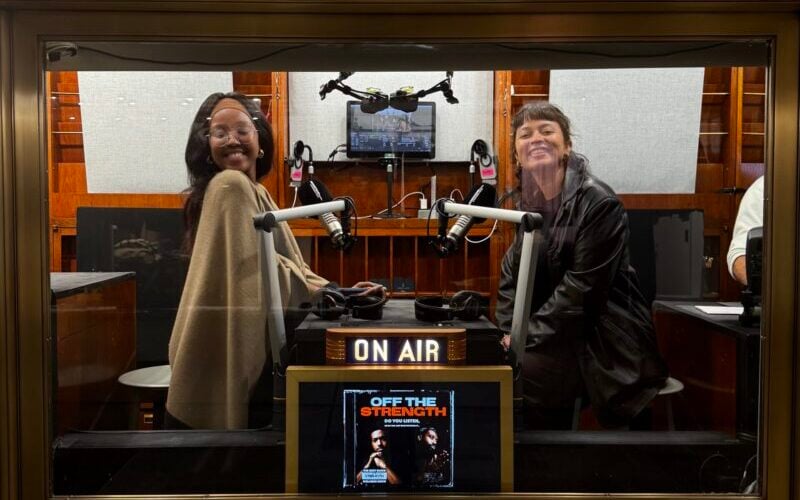
Image credit: Naomi Grewan
My second argument for audio is that it’s intimate. When visual distractions are removed, you leave room for a deeper emotional connection. Most podcast users listen alone, often with headphones on. You’re right there with the person telling the story, no matter where you are physically. There’s a closeness created by the voice that can’t be replicated by text.
My third and final argument is that audio encourages imagination. When you listen to someone describe their experience, your mind fills in the details, drawing from your own life and memories. This makes the story more personal than other media — you’re not just observing someone else’s reality. You’re experiencing it with them.
As Curtis and Sikelela’s stories continue to develop, I’m reminded daily why this work matters. Every interview, every edit, and every vulnerable conversation brings us closer to a world where talking about mental health is as natural as talking about how cold it was in June.
About Naomi Grewan
Naomi Grewan is a Senior Communicator Fellow with the Stavros Niarchos Foundation (SNF) Global Center for Child and Adolescent Mental Health at the Child Mind Institute. She is also a communications manager and associate producer with Radio Workshop in South Africa. With an interest in media and social justice, Grewan continues to explore this intersection through podcasting and youth radio.