Blog
Surf Therapy: A Powerful Low-Intensity Approach in Global Youth Mental Health Care
By Mai El Shoush, Partnerships Campaign Manager, Stavros Niarchos Foundation (SNF) Global Center for Child and Adolescent Mental Health at the Child Mind Institute
In Conversation with Waves for Change
The world’s oceans have long been profound forces that shape coastlines, cultures, and scientific discovery. And today, through targeted programs, they also serve as therapeutic environments transforming youth mental health worldwide.
As global health systems continue to explore solutions that minimize resource constraints while addressing child and adolescent mental health demands, innovative approaches like surf therapy are demonstrating remarkable effectiveness as low-intensity initiatives. From the beaches of California to the coastal communities of South Africa, Australia, Hawai’i, the United Kingdom, and Senegal, these programs are creating accessible entry points for young people.
Wave for Change (W4C) — a South Africa-based organization and valued implementation partner of the Stavros Niarchos Foundation (SNF) Global Center at the Child Mind Institute — has developed an evidence-based Surf Therapy program for youth in underserved communities. We spoke with their chief development officer Paula Yarrow and senior grant manager Jill Sloan about the award-winning program. As a highly regarded Cape Town‑based NGO that uses surfing as a therapeutic tool to support youth mental health, W4C offers safe spaces, evidence‑based emotional regulation tools, community mentorship, and a pathway to resilience for young people growing up in challenging environments.
The partnership includes the identification of workforce gaps and training needs for frontline workers such as NGOs, to further expand evidence-based support and brief interventions through culturally appropriate, low-intensity psychological therapy approaches. The context-specific training materials are expected to be piloted later in the year in South Africa and are intended to improve access to quality mental health care for young people.
W4C launched Surf Therapy in 2009, which has since helped more than 10,000 adolescents experiencing high-stress environments gain valuable coping skills across its hubs in the Western and Eastern Cape as well as Cape Town. Participants learn how to build positive social networks and develop self-regulation skills to support healthy emotional and behavioral responses to stress, with coaches themselves aged between 18-25. The program creates a fun, culturally relevant environment through the Take 5 model — a framework W4C has designed to be adapted for a range of sports, arts, and cultural initiatives. The model has been utilized by several leading global organizations, including UNICEF.
Waves for Change also played a key role in the founding of the International Surf Therapy Organization (ISTO), connecting practitioners, clinicians, and researchers to advance science research, raise awareness, and support surf therapy.
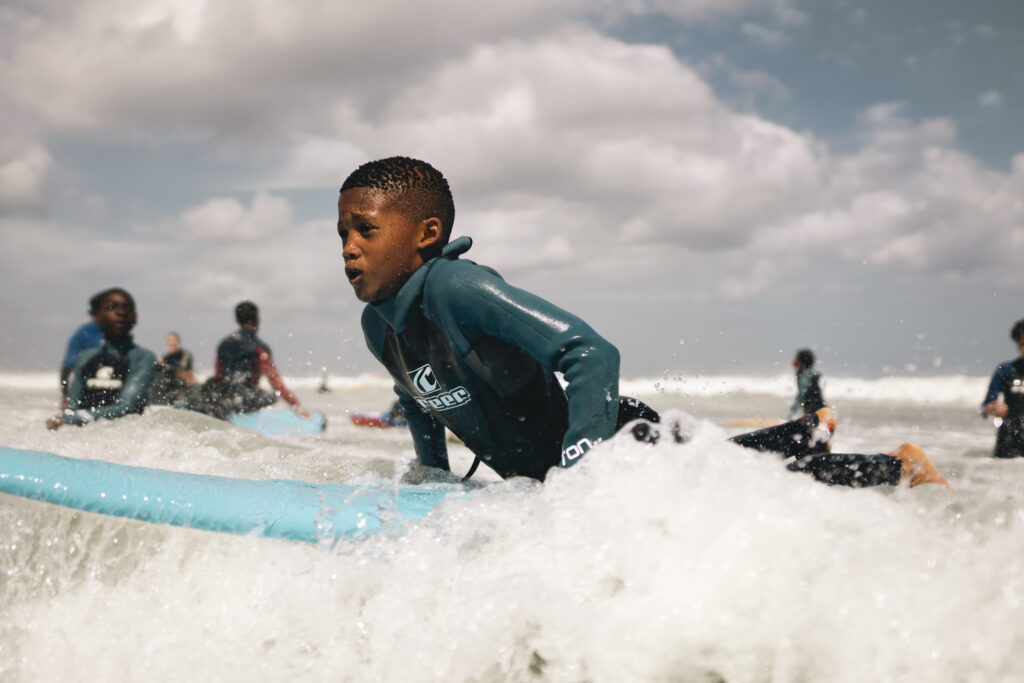
How does Waves for Change use evidence-based Surf Therapy and capacity building as a solution to fill the gap in youth mental health care?
Approximately 90 percent of the world’s adolescents live in low- and middle-income countries (LMICs). In the most underserved communities, adolescents may experience repeated exposure to violence, unmet basic needs, and limited access to safe spaces or trusted caregivers. Typically, there are very few mental health services that are accessible to such youth.
The more Adverse Childhood Experiences (ACEs) a child or adolescent has whilst growing up, the more likely they are to develop toxic stress — an ongoing stress state without respite. This can often lead to mental health conditions such as anxiety, depression, substance misuse, and cognitive impairment. This can also result in the development of physical health conditions such as heart disease as they grow into adulthood.
The main problem we’ve identified is that there aren’t enough trained workforces (e.g., sports coaches, youth facilitators) that are able to deliver simple, fun, structured play-based sessions with consistency at scale. Our work provides a response to this issue within the adolescent mental health promotion and illness prevention arena. Additionally, our initiatives significantly increase the number of individuals — coaches, teachers, mentors or others — who are already in contact with young adolescents and can provide them with mental health support to foster their immediate and longer-term mental health.
How has Waves for Change adapted the organization’s Surf Therapy program to develop the Take 5 model?
Waves for Change’s Take 5 training model has been incubated, tested, and rigorously evaluated within W4C’s award-winning Surf Therapy program. Take 5 distils the key components of our Surf Therapy program, providing coaches with the essential skills they need to build and sustain caring relationships with children. And it uses a simple teaching routine that creates consistently engaging, fun, structured programs for children and adolescents that suit their language, culture, and context.
Take 5 is low intensity and cost-effective — tailored for high-stress environments and the unique mental wellness needs of adolescents living in multidimensional poverty, conflict, or crisis.
How has partnering with young people to research and co-develop programs made the work more impactful?
In research studies we’ve conducted, adolescent participants (ages 10-16) reported experiencing between 6-8 adverse events every year, including violence and abuse. When asked what sorts of spaces they wanted to see at Waves for Change, the adolescents identified core components such as access to a safe space where they could have fun, be heard, and learn skills to cope. These components now form the bedrock of our Surf Therapy program. We initially worked with 9-12-year-olds and have since developed the follow-on programme for adolescents up to age 16 who have graduated the Surf Therapy programme. This is called Surf Club and is available to all Surf Therapy graduates.
Waves for Change also conducts pre- and post-intervention surveys with participants to monitor the impact of our work. Our coaches (ages 18-25) are at the frontline of delivering our services. A key role they play is to listen with care and respect to the adolescents’ concerns, and to share them with our Child Protection team for review and follow-up when needed.
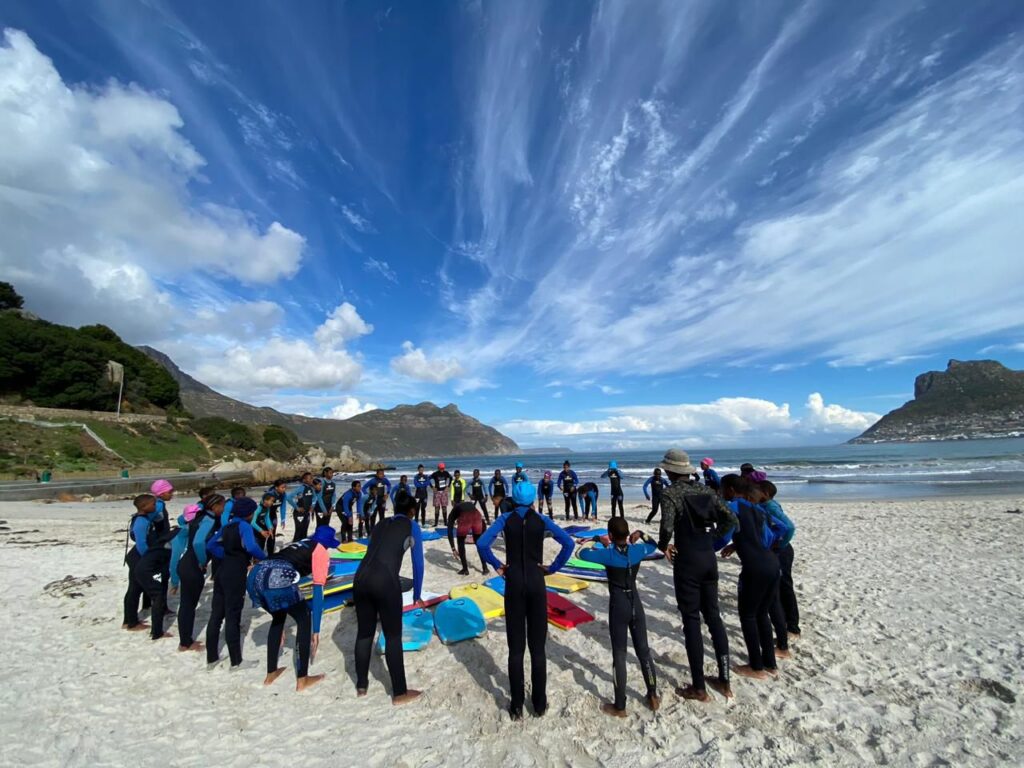
What makes your partnership with the SNF Global Center at the Child Mind Institute unique?
Working with the Child Mind Institute allows Waves for Change to collaborate with and learn from colleagues doing similar work in the adolescent mental health space across South Africa, the United Kingdom, and Brazil. The partnership offers an opportunity to learn about approaches that have been successful in other health systems. It has also allowed Waves for Change to share detailed information about the training and supervision protocol used to develop key competencies in the coach workforce that leads Surf Therapy in South Africa. This has helped the Child Mind Institute to develop a comprehensive guide for other similar workforces.
Can you expand on the importance of partnerships in strengthening youth mental health care and community empowerment?
Partnerships allow for the consolidation of skills and resources so that a greater impact can be achieved. For example, at Waves for Change, we work with over 70 referral partners every year to identify young adolescents who can benefit from our Surf Therapy program. We are also partnering with the Department of Cultural Affairs and Sport to use our Take 5 model to train MOD and YearBeyond coaches and mentors, who are already reaching large numbers of children and young adolescents through their work. And we’re contributing to building the broader ecosystem of mental health support for adolescents and children by training large national NGOs, government agencies, and humanitarian organizations with our Take 5 model.
How can non-profits further help foster strong peer networks and inclusive safe spaces?
Some of the key lessons we have learnt are the following:
- In the field of youth mental health, make youth the leaders on program implementation
- Provide youth with skills, opportunities, supervision, and support so that they can grow and develop further
- Maintain a strong culture of protection, respect, and communication so that all participants feel safe, welcome, accepted, and heard
Read more about W4C’s Surf Therapy from Youth Liaison Officer, Azola Sibanda and Training Manager Jamie-Lee Davids
