Blog
The Importance of Intergenerational Dialogue
By Ananya Meenakshi, 2026 Youth Mental Health Academy Intern, Child Mind Institute
How the Stavros Niarchos Foundation (SNF) Global Center’s second annual Global Summit on Youth Mental Health is advancing opportunities for young people and experts to exchange perspectives and shape priorities together.
Intergenerational dialogue is an excellent way for different generations to learn from each other’s experience; each generation can share their knowledge to develop helpful solutions.
Around the world, instances of conflict and political instability have often led to serious consequences. The potential for peace is more likely to be achieved if there is a higher level of collaboration and understanding between generations. Intergenerational dialogue, therefore, can be an effective way to address trauma and foster resilience.
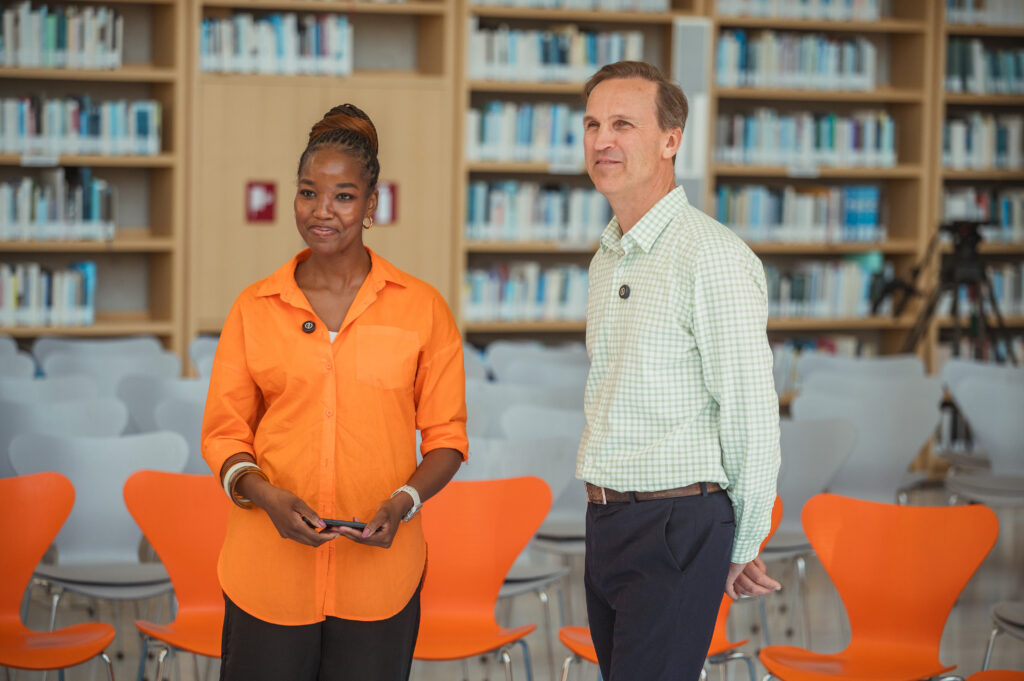
To ensure intergenerational dialogue is beneficial, it is important to be respectful, mindful of everyone’s roles, adapt to changing needs, and set mutual expectations. The SNF Global Center for Child and Adolescent Mental Health at the Child Mind Institute’s Global Youth Advisory Council (GYAC) members are excited to further engage in shared learning and brainstorming during the second annual Global Summit on Youth Mental Health in New York, September 21-24.
“Young people’s lives are structured much more differently than Greece’s older generations, who may have had their path laid out for them,” explains Faidra Kaberidi, a GYAC member from Greece. “The biggest challenge today is that the unlimited opportunities available to us can be overstimulating, and older generations might not understand the difficulty of having to choose.”
These unlimited opportunities, she adds, include lifestyle choices like style, sexuality, gender, personality, and so forth.
“Though being given these opportunities is not negative, it can be challenging for young people to explore and discover themselves in a sea of endless opportunities,” says Kaberidi.
As we pull back the curtain, the summit is multigenerational exchange in action — giving youth an open space to discuss issues, develop their skills, and create solutions.
The event will take place at the Child Mind Institute’s New York headquarters under the theme, “Redefining Mental Health Care: Youth Perspectives in a Changing World.” It will feature three diverse sessions including panel discussions, breakout sessions, and a youth-moderated Q&A with global experts. The sessions will cover three categories:
- “Meeting Young People Where They Are” will focus on topics such as school systems and digital spaces.
- “What Do Young People Care About” is set to expand into climate change, economic instability, and political polarization.
- “Setting Young People Up for the Future” looks at preparing young people to take care of their mental health in our modern world.
To ensure challenges are being solved efficiently, intergenerational dialogue must therefore be established. Both parties have valuable knowledge to contribute to the bettering of our society. The youth summit successfully implements these progressive values and facilitates the inclusion of cross-generational conversations.
By laying the path for both groups to speak and listen to each other, we are supporting the advancement towards a desired, exceptional future.
Learn more about the inaugural Global Summit on Youth Mental Heath
Learn more about the Youth Mental Health Academy at the Child Mind Institute