
Introduction
A New Landscape of Stressors
Across the United States, families are navigating an unprecedented range of stressors — from economic uncertainty and loneliness to emerging technologies, social pressures, and global events. These challenges affect individual well-being, reverberate through family relationships, and shape how young people envision their futures. Understanding how different generations experience the impacts of these stressors is critical for providing the supports that families need.

Navigating Mental Health
An Intergenerational Perspective
The Child Mind Institute, with funding support from the Morgan Stanley Alliance for Children’s Mental Health, conducted a study that asked a nationally representative sample of 1,000 parent-child pairs across the United States how they see today’s mental health challenges.
Results
Why This Matters
When parents and youth highlight the same mental health challenge — like loneliness — it signals urgency. And when they diverge, it reveals blind spots that can prevent young people from getting the support they need. Our research reveals that while critical differences do persist, there is more common ground than we may think. That shared foundation is a starting point for action.
Families can begin by having more open conversations about stress. Schools and community leaders can create opportunities for connection. And policymakers can help expand access to care and support prevention efforts.

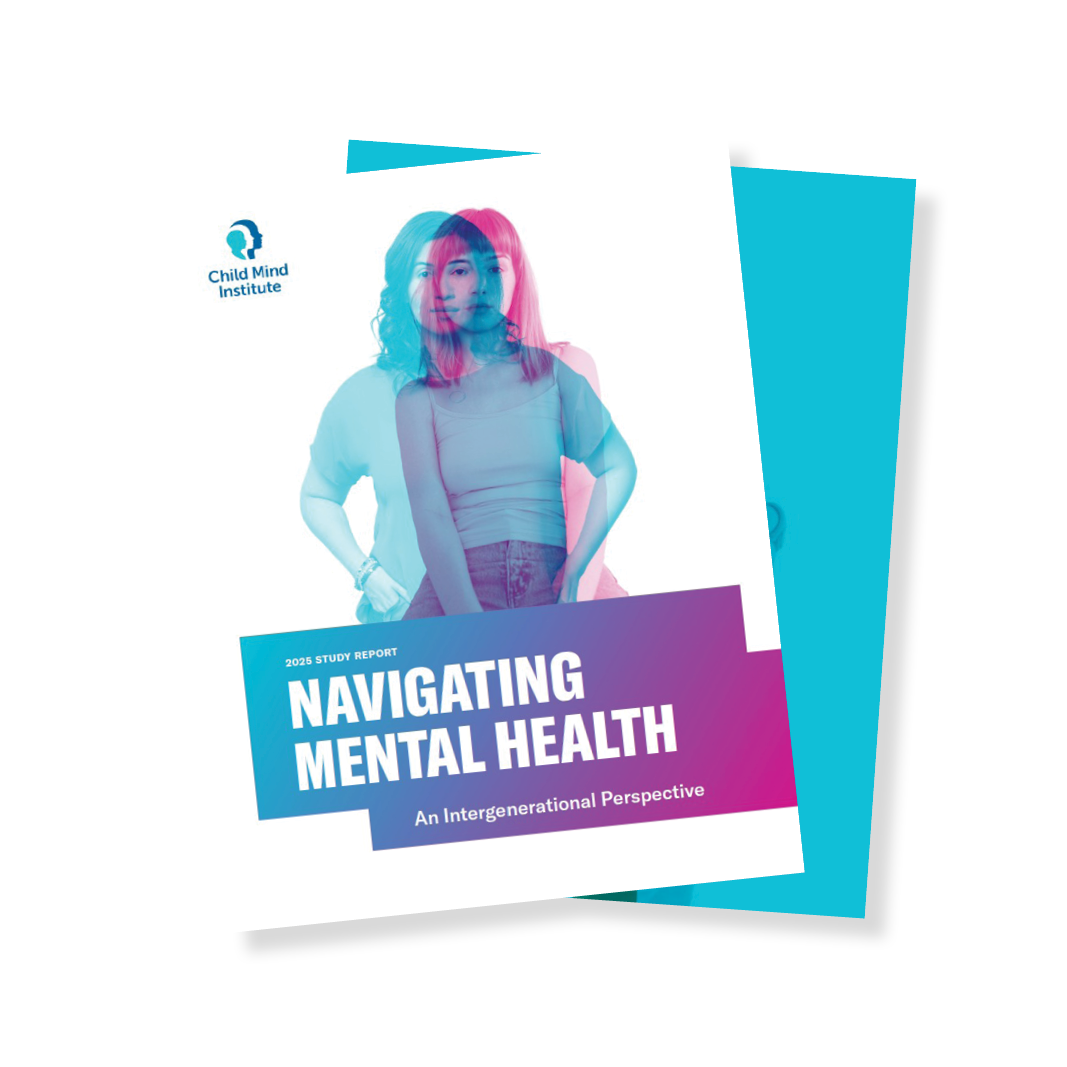
Download the Report
Get the full report for detailed findings on family mental health, generational differences, and recommendations for action. Or view our past reports.