Mental Health Fitness
Mindfulness
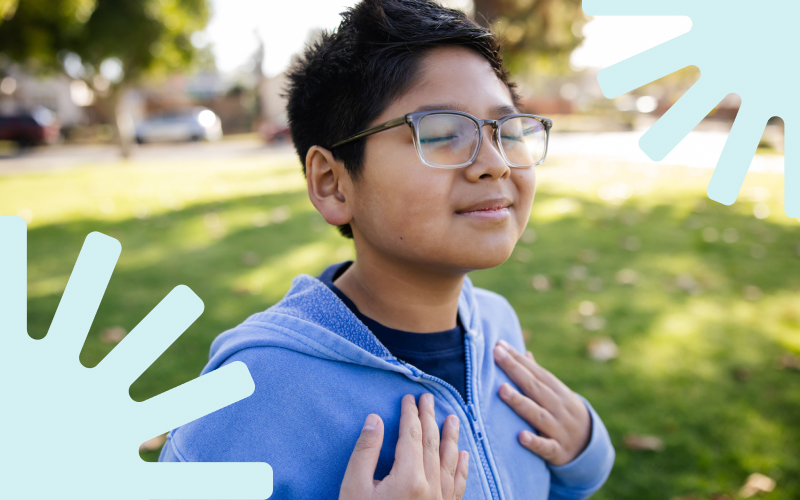
Our minds can often wander into thinking about the past and the future. Mindfulness is the act of paying attention to the present moment on purpose and without judgment. Kids who practice it regularly can become more self-aware, more focused, and better able to sit with difficult emotions.
MINDFULNESS IN
Elementary School

What Kids Should Know About Mindfulness
- Children can learn mindfulness by treating it like a game — paying attention to what’s around them using all their senses.
- Noticing something you can see, hear, smell, taste, or feel brings your focus to what’s happening right now.
- Mindfulness takes practice, and families can make it a habit by incorporating it into their walk or drive to school, or while eating a meal together.
What This Skill Teaches
Mindfulness is a skill with many benefits — it can help kids focus better in class or rein in impulsive behavior. When they take a pause to notice what’s happening, they can respond more intentionally.
For kids, practicing mindfulness can help them regulate their emotions, increasing compassion for themselves and others.
Download the Elementary Guide
Each guide includes a skill summary for caregivers and a printable activity sheet.
MINDFULNESS IN
Middle School

What Tweens Should Know About Mindfulness
- Mindfulness for kids can help them handle the increased social and academic pressures of middle school.
- Focusing on the five senses — what you can see, hear, smell, taste, and feel right now — helps you stay in the moment.
- Middle schoolers can practice mindfulness anywhere — while eating, on the bus, at swim practice — in any situation where they can be fully engaged.
What This Skill Teaches
Mindfulness is a skill with many benefits — it can help kids focus better in class or rein in impulsive behavior. When they take a pause to notice what’s happening, they can respond more intentionally.
Practicing mindfulness regularly can also help kids regulate their emotions, increasing compassion for themselves and others.
Download the Middle School Guide
Each guide includes a skill summary for caregivers and a printable activity sheet.
MINDFULNESS IN
High School

What Teens Should Know About Mindfulness
- The essence of mindfulness: When the mind wanders, bring your attention back to the present moment.
- The concept of mindfulness is simple, but that doesn’t mean it’s easy. Practicing it daily helps.
- Teens may not always feel calm and relaxed when practicing mindfulness, and that’s okay — just noticing how they are feeling in the moment makes a difference.
What This Skill Teaches
High schoolers are managing academic pressure and complex relationships simultaneously, and mindfulness can help put things in perspective.
Practicing mindfulness for teens can help increase their self-compassion and empathy for others.
Establishing mindfulness as a daily habit, even if it’s brief, can help teens recognize the benefits of small, consistent actions.
Download the High School Guide
Each guide includes a skill summary for caregivers and a printable activity sheet.
Explore More Skills
How to recognize and name emotions
Learn skills such as paced breathing for stressful situations
How thoughts, feelings, and behavior are related
Skills for coping with uncomfortable feelings