Blog
From Evidence to Practice: Lessons From Implementing the Psychosocial Support Program in Pernambuco, Brazil
By Irenildes Silva, Educational Consultant at the Child and Adolescent Mental Health Initiative (CAMHI) Brazil
Priscila Borges, Senior Public Policy Analyst at Institute for Health Policy Studies (IEPS)
Maria Leticia, Public Policy Coordinator at Institute for Health Policy Studies (IEPS)
Scaling school-based mental health programs is one of the greatest challenges facing education systems in Brazil. Not due to a lack of good ideas or scientific evidence, but because turning a promising intervention into a sustainable, day-to-day practice requires much more than high-quality training materials. It requires coordination across different levels of the education system, time, leadership commitment, and the ability to adapt to local realities
The implementation of the Psychosocial Support Program in Schools (PSP) in the state of Pernambuco, in northeast Brazil, offers important lessons about what it takes to bring evidence-based mental health initiatives to scale. Developed by the Child and Adolescent Mental Health Initiative (CAMHI) in Brazil, under the Stavros Niarchos Foundation (SNF) Global Center for Child and Adolescent Mental Health at the Child Mind Institute, the PSP is designed to increase the capacity of school staff to promote mental health and well-being within school communities.
Through the SNF Global Center, the Child Mind Institute works alongside local partners to translate scientific evidence into practical, scalable solutions that strengthen child and adolescent mental health systems. In Brazil, that means working collaboratively with state education leaders to adapt evidence-based approaches to local realities rather than introducing one-size-fits-all solutions. The PSP is currently being implemented in partnership with the State Departments of Education of Pernambuco and Rio Grande do Sul; their contributions have been instrumental in adapting and improving the program to reflect the realities of Brazil’s public education systems.
The PSP combines interactive training sessions with microlearning content, providing practical tools to help teachers and staff recognize signs of emotional distress in young people, respond ethically and compassionately, and offer the appropriate support.
The PSP was developed through a partnership with the Institute for Health Policy Studies (IEPS) and aligned with Projeto Entrelaços, a state initiative focused on promoting mental health and preventing violence in schools. Rather than creating a parallel agenda, the PSP curriculum was integrated into existing state structures, strengthening capacities already present within the education system and increasing the likelihood of long-term sustainability.
"One of the most important lessons from the Pernambuco experience is that sustainable change depends on a strong connection between decisions made at the top and classroom practices."
Feedback highlights the value of this approach. One of the program’s greatest strengths is its recognition that implementing psychosocial support in schools is not simply a pedagogical or technical challenge. It is a public policy implementation challenge.
A recent policy brief from the Blavatnik School of Government at the University of Oxford highlights three key principles for achieving sustainable change in education systems: 1) Implementation should be understood as a process rather than a one-time event; 2) lasting change depends on shifts in beliefs and behaviors; and 3) success relies on effective coordination across different levels of the system. Training teachers alone is not enough — the experience in Pernambuco illustrates this clearly.
Pernambuco’s state education system includes 1,082 public schools, serves approximately 500,000 students, and employs nearly 20,000 teachers. The state also contains a rich diversity of social, cultural, geographic, and economic contexts, including urban, rural, Indigenous, and Quilombola schools, as well as communities with varying levels of access to services and opportunities. Implementing a psychosocial support program in Pernambuco requires more than high-quality content. It requires thoughtful implementation infrastructure.
To prepare the system for implementation at scale, three complementary strategies were developed.
The first was the creation of the Intersectoral Committee on Mental Health in Schools. Bringing together representatives from health, social assistance, and public security, the committee helped establish shared responsibilities, technical guidelines, and referral pathways across sectors. The committee also developed the Pernambuco State Protocol for Psychosocial Support in Schools, which standardizes procedures for responding to mental health concerns and violence affecting students and school communities.
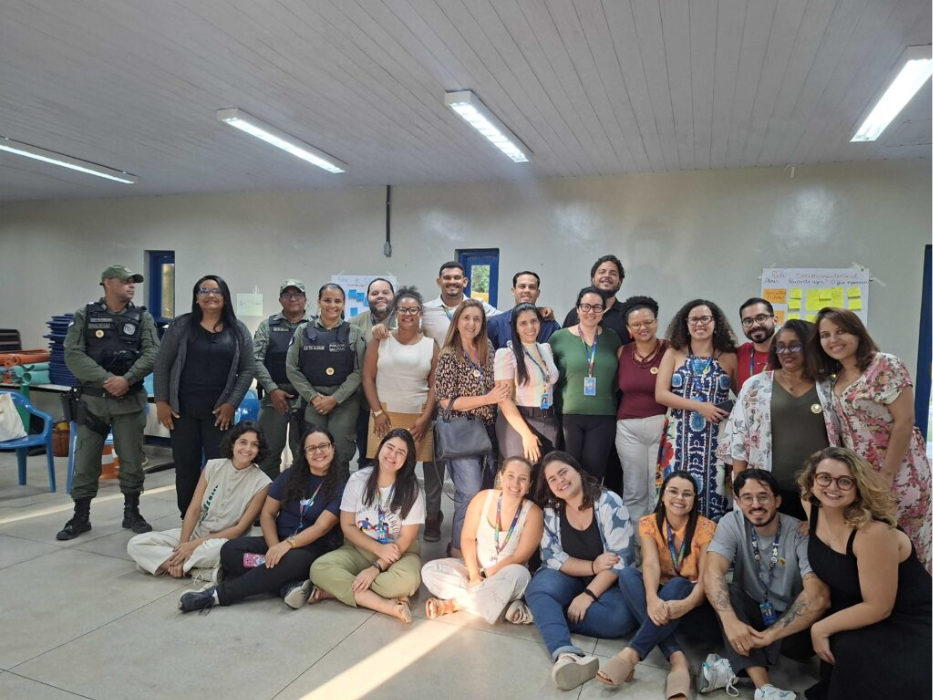
The second strategy focused on institutionalizing roles and responsibilities. Pernambuco established a governance framework for its school mental health agenda through official regulations and technical guidance. This framework includes:
- The School Psychosocial Support Unit (UAPSE)
- 16 Regional School Psychosocial Support Centers (NAPSEs)
- The hiring of one psychologist for every state school
Together, these measures help ensure that school mental health efforts are embedded within the public system.
The third strategy centered on strengthening the middle layer of the education system. Evidence from implementation research consistently shows that regional structures play a critical role in translating policies developed at the central level into meaningful action in schools. To support this process, state education leaders aligned regional managers and coordinators around the PSP implementation strategy and its integration with Projeto Entrelaços. This created shared ownership and strengthened the connection between policy and practice.
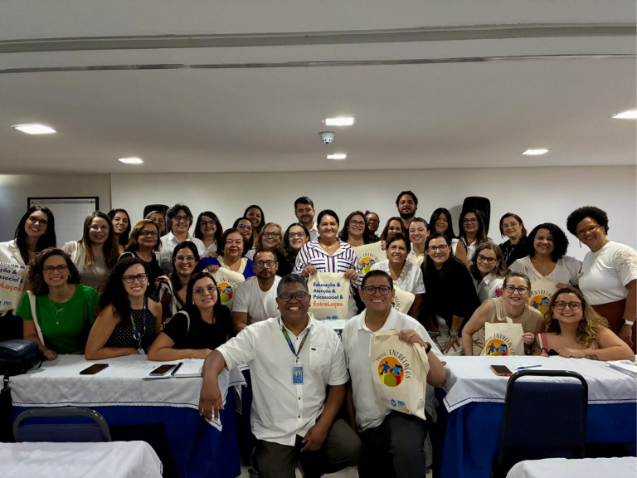
One of the most important lessons from the Pernambuco experience is that sustainable change depends on a strong connection between decisions made at the top and classroom practices. Regional teams help contextualize policies, support schools in their day-to-day work, address implementation challenges, and sustain momentum over time.
Strengthening Local Capacity for Implementation
With this infrastructure in place, the PSP was rolled out through a cascading training model designed to build capacity within the public education system itself. The first phase began with training provided by CAMHI Brazil to the technical team of the School Psychosocial Support Unit (UAPSE), the department within the State Department of Education responsible for coordinating psychosocial support initiatives.
Rather than simply receiving a ready-made program, the team actively participated in adapting the content to local realities. They helped refine the language, identify priority challenges faced by each school, and contextualize examples and strategies for Pernambuco’s educational context.
"Evidence-based programs must engage with both global and local evidence as well as lived experiences"
This step is essential. Evidence-based programs must engage with both global and local evidence as well as lived experiences. Without this process, even well-designed interventions could be perceived as disconnected from the realities of schools.
This adaptation process was also informed by focus groups conducted with teachers, school leaders, students, and school psychologists, ensuring that local perspectives shaped the final program design.
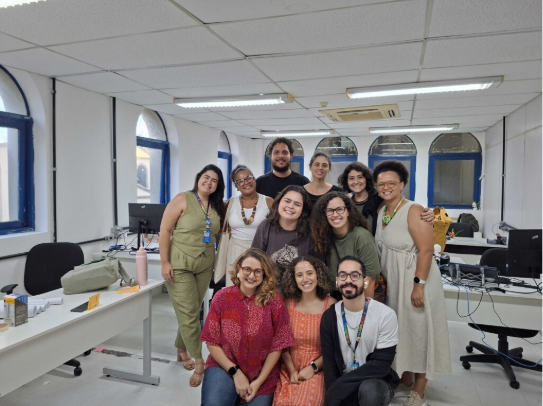
In the second phase, the UAPSE team, together with CAMHI Brazil and in partnership with IEPS, trained approximately 90 professionals from the Regional School Psychosocial Support Centers (NAPSEs). These professionals served as a strategic intermediary layer between the State Department of Education and schools. A key lesson here was understanding the power of a decentralized public education system and leveraging it to expand reach and build momentum for the project.
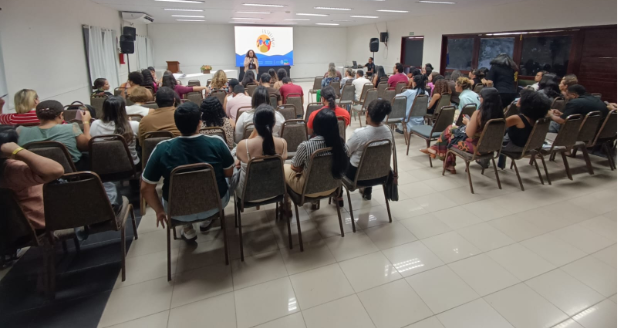
During the third phase, NAPSEs professionals began training school psychologists across Pernambuco’s 1,082 state schools, with ongoing support from the UAPSE and IEPS teams. By July 2026, nearly 1,000 professionals are expected to have completed the training. Beginning in 2027, these psychologists, supported by the NAPSEs and UAPSE, will be responsible for training approximately 20,000 teachers across the state education network.
The cascading model is built to strengthen capacity within the state and reduce reliance on external partners over time. Rather than permanently centralizing implementation within partner organizations, the process strengthens structures that already exist within the public education system — but doing this responsibly requires planning, ongoing support, and built-in time for learning and adaptation.
For this reason, Pernambuco also launched a pilot phase involving the training of 160 teachers. The goal is not simply to scale quickly, but rather to understand how educators experience the training, identify which adaptations may still be needed, and uncover any barriers that emerge in practice before expanding implementation across the entire system. This approach aligns closely with another core implementation principle: sustainable change happens when systems create space for listening, learning, and adaptation throughout the process.
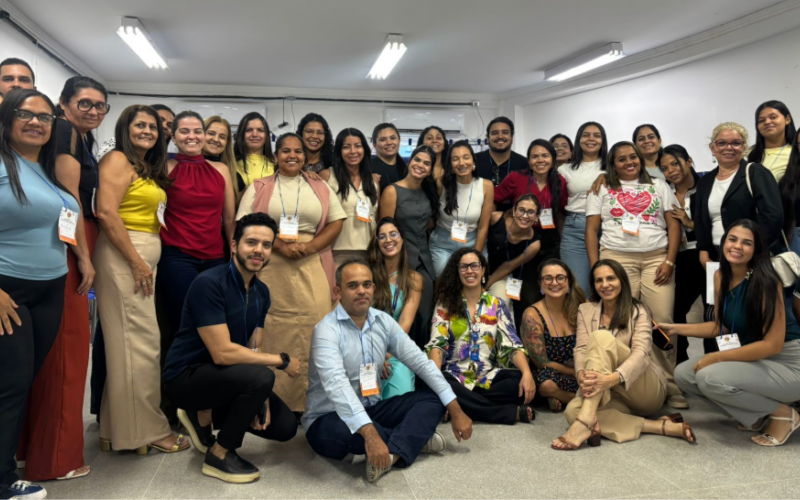
When analyzing the role of leadership, creating space for listening and learning is often an underestimated tool when discussing school mental health. The work of the PSP happens through the relationships between educators and students. But its successful implementation depends on a much broader mobilization effort.
"The experience in Pernambuco demonstrates that supporting mental health in schools is about much more than delivering training. It is about collaboratively creating the conditions for caring practices to become embedded within public education systems in ways that are both scalable and sustainable."
From leaders within the State Department of Education to regional managers, school principals, psychologists, and teachers, each person has a unique role to play. Their contributions are complementary and interconnected. Without institutional support, coordination across different levels of the system, and alignment with public policy, mental health and psychosocial support initiatives tend to rely primarily on the efforts of highly committed individuals. And that is rarely sustainable over time.
The experience in Pernambuco demonstrates that supporting mental health in schools is about much more than delivering training. It is about collaboratively creating the conditions for caring practices to become embedded within public education systems in ways that are both scalable and sustainable. This may be one of the greatest challenges — and one of the greatest opportunities — for the future of school mental health in Brazil.