Blog
From Preparation to Purpose: Reflections on the Global Youth Advisory Council at SNF Nostos 2026
By Delice Lumbu, Director of Youth Engagement, SNF Global Center for Child and Adolescent Mental Health, Child Mind Institute
There are moments in youth engagement that remind you why the work matters. As we look ahead to the second “Global Summit on Youth Mental Health” at the Child Mind Institute’s headquarters in New York this September, I’m reflecting on the recent SNF Nostos 2026 celebration in Greece. The sense of leadership, collaboration, and possibility was palpable.
The event marked 30 years of the Stavros Niarchos Foundation (SNF)’s global impact and was centered on Humanity at the Core. Throughout the week, the SNF Global Center at the Child Mind Institute participated in important conversations across three panels — exploring topics like cross-country collaborations, digital innovation, and community-led approaches.
The SNF Global Center also introduced Growing Up Digital: An Evidence-to-Policy Synthesis, a landmark report developed through the Child and Adolescent Mental Health Initiative (CAMHI) in Greece — focusing on risks and solutions associated with adolescent mental health in a digital world, and incorporating the perspectives of the initiative’s Youth Advisory Groups from across Greece. And as part of a panel on SNF’s Global Health Initiative (GHI), Founding President and Medical Director of the Child Mind Institute Harold S. Koplewicz, MD, and Senior Vice President of Global Programs at the Child Mind Institute Giovanni Salum, MD, PhD, explored actionable solutions in shaping stronger systems of care during a conversation moderated by SNF Co-President Andreas Dracopoulos.
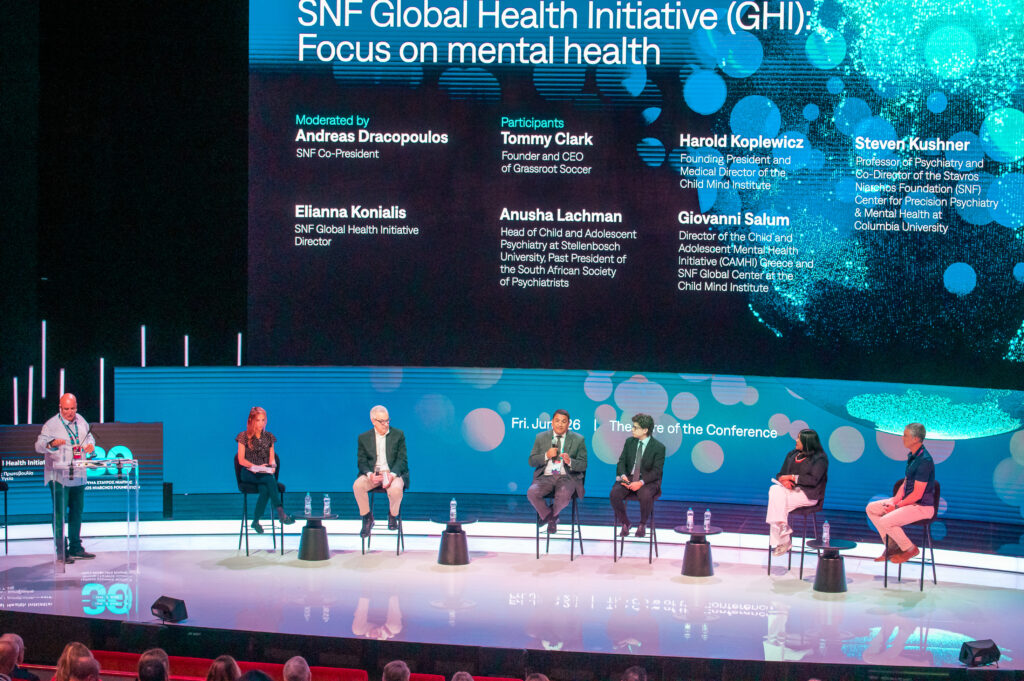
“The next frontier will be focused on ensuring evidence informs policy and practice at scale. SNF Nostos 2026 demonstrated what’s possible when philanthropy, research, and youth leadership come together with a shared commitment to action. That is how lasting progress is built,” says Dr. Salum.
As Director of Youth Engagement, I had the privilege of working closely with members of the SNF Global Center’s Global Youth Advisory Council (GYAC) from South Africa, Brazil, and Greece. At SNF Nostos 2026, they took center stage.
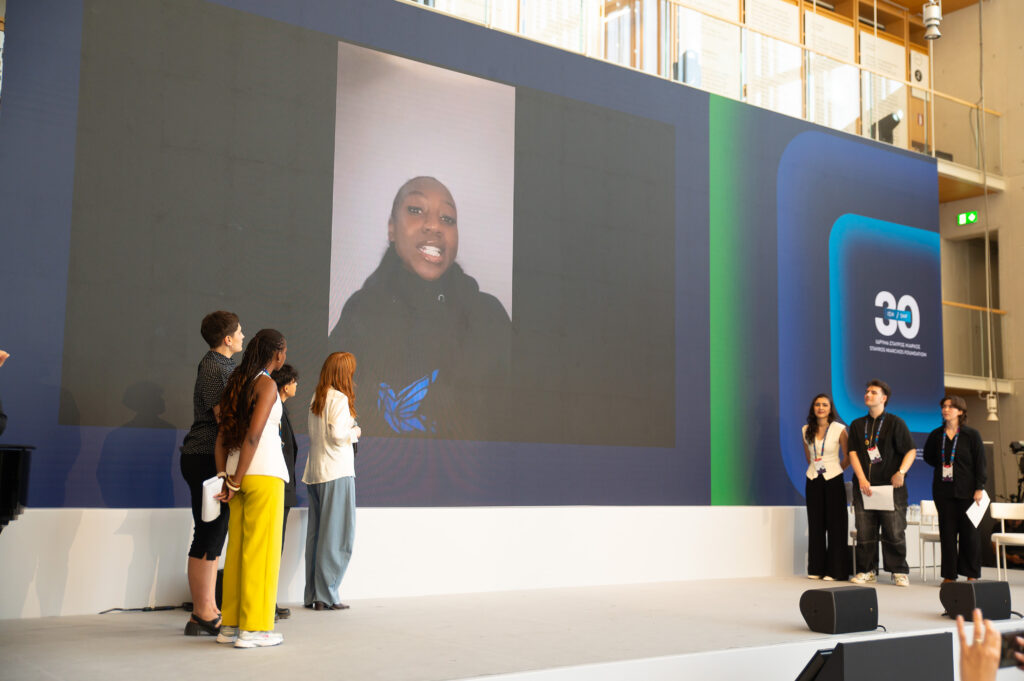
Throughout the months leading up to the conference, I watched ideas evolve into plans, uncertainty turn into confidence, and six young people grow into a team that trusted one another enough to challenge ideas, embrace different perspectives, and speak with one collective purpose. The GYAC’s debate explored the complex relationship between technology, education, and youth mental health — moving through a series of interconnected perspectives rather than presenting technology as simply “good” or “bad.”
The conversation opened by examining the potential negative impacts of technology when introduced into schools without sufficient guidance, before exploring the broader mental health implications for children and adolescents. From there, the discussion challenged the idea that simply banning technology is the answer. Instead, members of the council considered the role of parents, families, schools, and communities in helping young people navigate digital spaces safely — and how they can be better supported. The GYAC also explored the generational cycle of digital habits, recognizing that young people often learn how to engage with technology from the adults around them. The debate concluded with a call for stronger digital literacy in schools. Members of the council also voiced the need for a collective approach that equips young people with the knowledge and skills to navigate technology in ways that support, rather than undermine, their mental health.
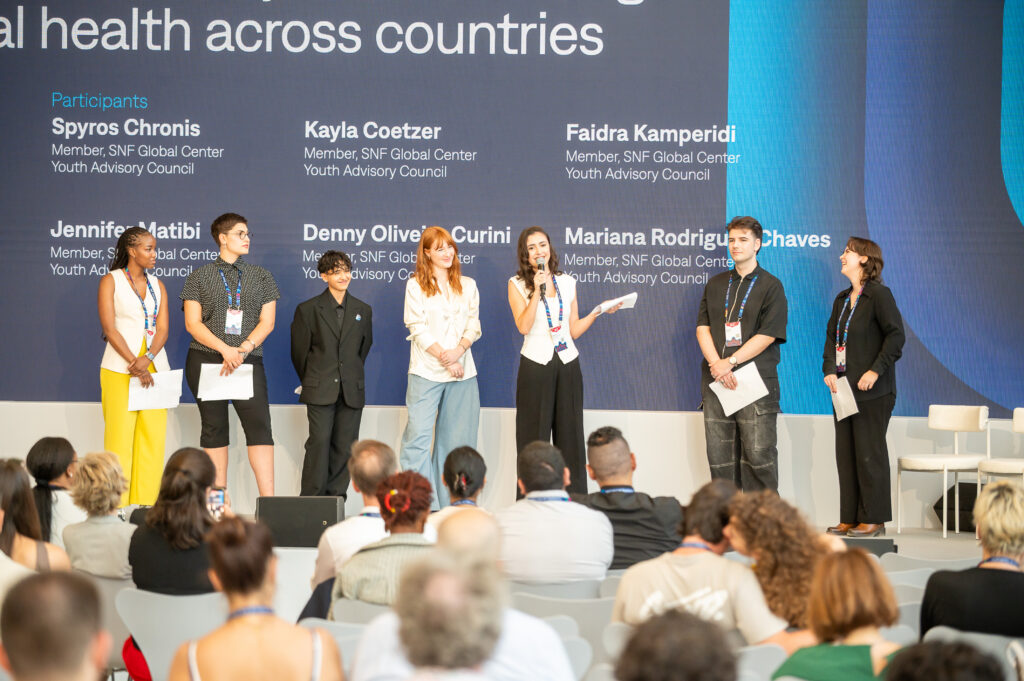
Additionally, the conference featured a cross-country panel exploring how evidence and partnerships can come together to strengthen child and adolescent mental health systems. Moderated by South African GYAC member Kayla Coetzer, the conversation brought together perspectives from Greece, Brazil, South Africa, and Mozambique — highlighting how different countries are working to translate research and evidence into meaningful action. The discussion emphasized that sustainable systems of change require collaboration between researchers, governments, practitioners, communities, and young people. Panelists shared real examples of how partnerships can help move evidence beyond research and into scalable interventions that respond to local needs and contexts.
In front of an international audience of experts and leaders in child and adolescent mental health, the six young members of the GYAC brought perspectives that were thoughtful, challenging, and grounded in lived experience. The council also created a space for the audience to think differently about the relationship between technology and mental health. Through debate and discussion, they challenged assumptions and demonstrated the value of giving young people genuine ownership of the issues that affect them.
That is the power of bringing young people together across borders.
We asked members of the GYAC to reflect on their time at SNF Nostos 2026
Q: Looking back on your experience at SNF Nostos 2026, what is one moment that will stay with you, and why?
SPYROS:
Of all the memories from SNF Nostos 2026, one stands out above the rest: the second our feet hit the stage. In an instant, the background anxiety transformed into pure presence as we shared our work, our ideas, and our honest fears with the audience. Standing next to my colleagues made all the hard work worth it. It was a collective victory that I’ll carry with me for a long time.
KAYLA:
What stays with me is the incredible feedback following our group debate. After months of planning and in-person rehearsals, to then finally getting to present it and having that hard work be recognized felt amazing. To have people say they will be using our structure with their own youth engagements was truly incredible and felt like what we brought to the table was being seen and then used to spark a different kind of youth engagement that we created and presented.
Denny:
The moment we shared our seeds and thorns after the session, everyone in the Lighthouse came together and connected.
MARIANNA:
The panel because I felt like the audience was really interested in our discussion. Also, I felt like I made a real impact in some people’s lives after receiving positive feedback.
JENNIFER:
The one moment that will stay with me is seeing youth representation woven throughout every part of SNF Nostos 2026. Young people were present in every space — leading conversations, working behind the scenes, and showcasing the impactful work they’re doing in their own countries. It was inspiring to see that youth were not included simply to fill seats or meet a quota, but were genuinely empowered to shape discussions, contribute their perspectives, and drive meaningful change in the mental health space.
FAIDRA:
One of the things that really stayed with me from my experience at SNF Nostos 2026, particularly during our session, was how interested the audience was in hearing young people’s perspectives on the issues and concerns we are facing today. Overall, my experience was truly positive and enjoyable.
Q: What did being part of the Global Youth Advisory Council at SNF Nostos 2026 teach you about youth leadership, collaboration, or meaningful youth engagement?
SPRYOS:
Being part of the GYAC taught me that meaningful youth leadership goes far beyond tokenized representation. Meeting and working with people across the globe and seeing how similar we all are and what we want to achieve. Geography and structural differences are what separates us and changes our journey towards the same goals. All together we can get along, co-create and work towards what we believe. Youth engagement is only authentic when institutions move past using young people as decoration and instead give them direct agency to challenge systems, shape strategy, and advocate for real, structural change.
KAYLA:
It showed me the power of collaboration beyond age, culture, gender, and language. The power of feeling at home amongst difference. I got to see how youth leadership looks outside of just South Africa and celebrate all its forms with my GYAC cohort.
DENNY:
It taught me that youth can actively change and impact spaces with their experiences and ideas.
FAIDRA:
As a young person, I had the opportunity to be surrounded by incredibly talented and knowledgeable people, and I was fortunate enough to listen to their experiences and learn from them. It opened up new perspectives for me and made me see things in ways I hadn’t before. I would absolutely love to have the opportunity to experience something like this again.
MARIANNA:
Being part of GYAC at SNF Nostos 2026 taught me that finding people with similar values is one of the greatest things we can do for ourselves. During the process of preparing for the panel, having people around me who were open to feedback and to true collaboration rather than competition made the experience unforgettable.
JENNIFER:
It taught me the importance of valuing everyone’s contribution in bringing a bigger vision to life. It also showed me the power of breaking down complex concepts so that everyone can understand them deeply and, most importantly, how to collaborate effectively as a diverse team with different backgrounds, perspectives, and lived experiences.
As we continue preparing for the second annual Global Youth Summit on Youth Mental Health and the next chapter of the Global Youth Advisory Council’s work, I carry this experience with me as a reminder of what becomes possible when young people are trusted with leadership.
Not only are they the leaders of tomorrow, but they are already leading today.