Blog
Turning Rejection Into a Roadmap: Advice for the Next Generation of Mental Health Leaders
A Conversation with Tom Osborn, Founder of Africa’s Largest Mental Health Provider Shamiri Institute
Aaliyah Nadirah Madyun, program director at the Stavros Niarchos Foundation (SNF) Global Center for Child and Adolescent Mental Health at the Child Mind Institute, recently sat down with Tom Osborn, founder of the Shamiri Institute and an International Advisory Board member at the SNF Global Center. They discussed Osborn’s remarkable journey as a young entrepreneur.
At just 18, while studying at Harvard University, Osborn founded the Shamiri Institute, which has since grown into Africa’s largest youth mental health provider — now reaching over 100,000 young people annually and having trained and employed more than 3,000 providers. In this candid conversation, Osborn shares hard-won lessons on resilience, mentorship, and well-being. He offers advice to the SNF Global Center’s Youth Council members — many of whom are launching their own mental health initiatives in communities across Greece, Brazil, South Africa, and beyond.
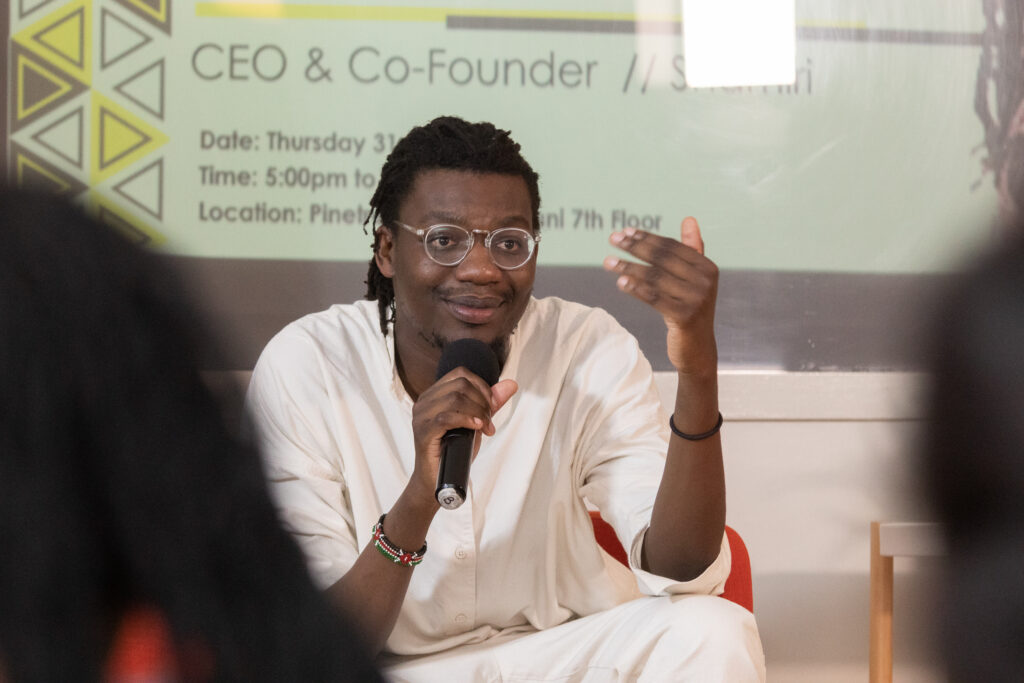
AM: You founded Shamiri when you were just 18. Many members of our SNF Global Center Youth Councils are now launching their own mental health organizations. What advice would you give them?
TO: I think these past three to five years post-COVID have been quite good for mental health. There’s just more dialogue, more conversation. It’s maybe one of the best times to start working in mental health. There is a big space for young people to be leaders. On the other hand, it’s also very difficult.
AM: What kind of difficulties can young people expect to encounter?
TO: It’s very difficult for a few reasons. We normally start this work because we have a lot of passion, enthusiasm, and commitment to the cause. But that is not the day-to-day of being a social entrepreneur. It’s convincing people to partner with you, to fund you, etc., which is a completely different skill set to learn. And the second part is getting a level of comfort with failure. Because the reality is, on average, nine out of ten doors that you try to open will not open; especially when you are starting. For example, if you’re in Brazil and there are 100 other young people trying to start something, there is a finite pool of opportunities and resources. So, when you are starting, part of the initial process requires you to develop resilience and a growth mindset.
AM: Could you speak about the role mentorship has played in your journey, and how young entrepreneurs can leverage mentorship to navigate the challenges of building something from the ground up?
TO: Mentorship is really crucial. Finding folks — researchers, practitioners, or just folks in the community — who can help provide guidance as you build the skills you need to be an effective entrepreneur.
AM: How would you recommend young people go about finding a mentor? It seems like that ability, identifying and cultivating a mentoring relationship, might be a skill set in itself.
TO: In my experience, there are three pathways. In many countries we have what we call accelerators, which look for young people who literally have an idea and enthusiasm, and then take them through 10–16 weeks of bootcamp where they can learn the skills to develop their idea. So, that’s one pathway. The second pathway, which really worked for me but may sound intimidating, is direct outreach to folks who have done something similar. So, you can do some research. It doesn’t have to even be related to mental health. It can be education or some broader thing. But find someone who has built something that you admire. You will be surprised how many people are willing to support and pay it forward, because we all have benefited from the help of someone else. I created an Excel spreadsheet with a list of people who I looked up to, and I reached out to them on LinkedIn. Sometimes you can even find their email. Some people said “no”, but if you reach out to 10 or 20 people, some people will talk to you. And the third pathway is . . . increasingly we have a lot of resources like the SNF Global Center Youth Councils and international organizations that deal with mental health. You can join these organizations to expand your network.
AM: Could you share your story with us and tell us how you got started?
TO: I started when I was in University as part of a research project I was doing when I was studying psychology. I needed to do something for my thesis and in the process of doing that I applied to an accelerator. I also went to my professor and asked him, ‘Do you know anyone who could connect me with?’ In fact, he helped me write my first grant and gave me the opportunity to learn those entrepreneurial skills.
AM: Starting at such a young age, one can imagine that you must have encountered many challenges and setbacks. What were the key lessons you took away from that growth period?
TO: The reality of this work, and not to discourage people but to give a factual picture, is that there are more setbacks than there are wins. Part of the process is that you learn from the setbacks. I can give you an example of some of my own setbacks. In my first year of doing this, we tried to raise money. We applied for grants, sent out proposals, etc.; but we couldn’t raise any money. So, what I did after getting the rejection is I would email and ask, “Do you have any feedback for us about why we didn’t get the funding?” or “Can we jump on a call so you can explain what we can do better?” What I learned from that was the way I was communicating what we were doing made sense in my mind, but I wasn’t putting myself in the shoes of the person who was reviewing the proposal. I only have five to ten minutes of someone’s time. So, how can I really simplify my message? For example, my first proposal was, “Shamiri does task-shifting mental health interventions for adolescent depression, anxiety, etc.” If you are in the field, you maybe get it. But if you are somebody who is just reading grants on mental health education, you don’t really get it. Now we say, “Shamiri means thrive and we enable young people to thrive.” So that invites people to ask how we’re helping people to thrive.
AM: What is another setback that surprised you?
A second example of a failure is getting buy-in from the beneficiaries that we were trying to work with. I thought, “We have this great idea, we’ve done this research, and it works. We’re going to go to schools and they’re going to be like, ‘This is great! Come work with us.’ Teachers are going to want to work with us.” But actually, in our first three years we were trying to work with 25,000 students and we ended up working with only 1,000 students. We really struggled with getting people to sign up. The lesson from that was we were thinking more from the idea this was our product, rather than thinking, “What is the problem that I am trying to solve for this person?” To give a concrete example, there are three people we need to get buy-in from: young people in schools, teachers, and parents. Just having a great product does not mean that people are going to use it. You need to figure out what the problem is. How can I solve it? How do I communicate this to users?
AM: I can imagine that dealing with failures and setbacks is extremely hard, especially for a young person. What would you say to a young person who is currently experiencing this?
TO: Finding ways to stay grounded and healthy from a well-being perspective is really crucial. Identify what matters to you and connect with those things. And ideally if you can find a way to build a routine around that, it could help. Doing this work takes a big toll. If you don’t find ways to ground yourself and get the energy to continue with this, you may burn out.
AM: Do you have some final words for our Youth Council members and other young people reading this?
TO: Those closest to the problem are those closest to the solution. I am from Kenya, which is a really young country. The median age is 19 and 70 percent of the population is under 30. If we are to solve some of these pressing problems, including mental health, those solutions are going to have to come from young people.