2026 STUDY REPORT
Building Bridges: Teen Loneliness and Connection
and its association with mental health and well-being.
Introduction
Meaningful Connection Matters
Loneliness and social isolation have emerged as major concerns for teens and their parents, with increasing evidence linking a lack of connection to poorer mental mealth outcomes.
While young people seem to have more opportunities to connect due to technological advancements, this generation may be feeling less connected in meaningful ways.

About the Study
Understanding Connection Across Teens’ Lives
The Child Mind Institute, with funding support from the Morgan Stanley Alliance for Children’s Mental Health, conducted a study that surveyed 1,000 U.S. teens ages 14–17 about connection across five domains — family, peers, school, self, and digital environments. Teens were asked what connection means to them, where they feel most connected, and who they turn to when they need support.
Key Stats
47%
47% of teens reported moderate to severe loneliness, and one in five screened positive for anxiety or depression.
80%
8 in 10 teens reported that being connected is very or extremely important to them.
88%
88% of teens reported that spending time with peers in person helps them feel connected.
29%
29% of teens reported using AI as a source of connection or support.
3.2x
Teens with lower connectedness reported 3.2 times higher loneliness than connected peers.
2x
Teens who spent 4+ hours passively scrolling reported nearly twice the loneliness of those who spent less than one hour.
Results
Why This Matters
The findings of this study suggest that youth mental health cannot be addressed through treatment-focused approaches alone. Higher connectedness is associated with lower loneliness, anxiety, and depression — which means supporting connections in young people should be a foundational public health strategy.
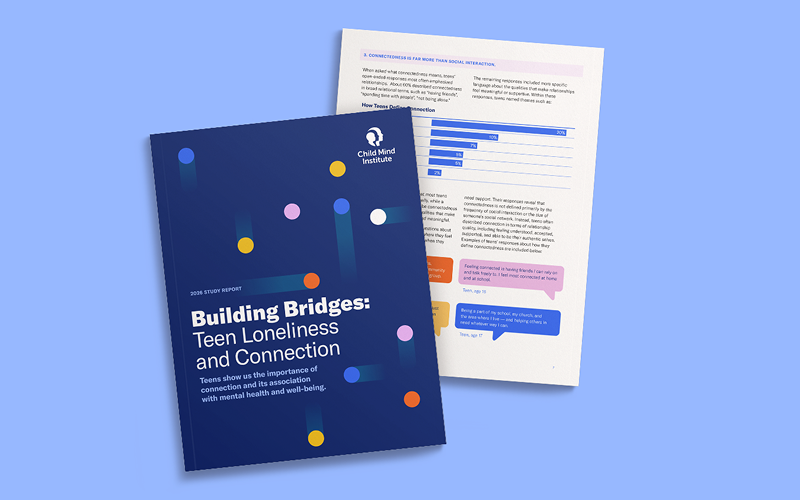
Download the Report
Get the full report for detailed findings on teen loneliness, sources of connection, and recommendations to support youth well-being. Or view our past reports.