Friendships support kids’ social and emotional development. Through friendships, kids build identity, a sense of belonging, and communication skills. Friendships also help kids learn to empathize and manage conflict.
How to Help Kids Through a Friendship Breakup
by
Molly Hagan
How to Help Kids Through a Friendship Breakup
What to do to support teens and preteens when they lose a friend
Clinical Expert: Dave Anderson, PhD
en EspañolKey Takeaways
-
For kids and teens, losing a close friend can feel as painful as a romantic breakup. Parents should recognize this pain as normal and valid.
-
The most helpful thing parents can do is listen and validate emotions. Kids don’t always want solutions — they want to be heard.
-
A friendship breakup doesn’t mean something is wrong with you. Frame the experience as an opportunity to think about building healthier relationships.
From the ages of 6 to 16, Margaret and her best friend were inseparable. “But then one week, it was just like she decided she didn’t want to hang out with me anymore,” Margaret says. “I felt like we were one person and then we split into two.”
When we separate from a really close friend, we tend to use language typically reserved for romantic relationships — we call it a breakup.
While a normal part of growing up, friendship breakups can still be uniquely painful for adolescents and teens, affecting the way they think about themselves and their relationships. So, it’s important for parents to understand why they happen, what to say to help kids cope, and how to talk to them about ending a friendship that no longer feels right.
Why do friendship breakups happen?
“I think it’s important to distinguish a friend breakup from just natural shifts in relationships,” says Jenna Klorfein, LCSW, a former high school counselor. Friends may drift apart, say, when they’re no longer in the same classes together, but a friend breakup is an intentional rupture, either between two people or an ouster of one person from a group.
Friend breakups are rarely attributed to one thing or event. “With female friendships in particular, I feel like there’s a narrative that it’s usually about a guy or a romantic relationship, and I have not found that to be true,” Klorfein says. “I think there’s usually much more nuance than that.”
In Klorfein’s experience, kids often drop friends when their interests diverge or when they feel smothered, like they can’t hang out with other people — though they don’t seem to say these things directly. More often she hears things like, “‘She’s so annoying. She’s been acting weird,’” Klorfein says. “There’s some disconnect. Usually, it’s a couple of instances and then one that kind of breaks the camel’s back. It’s a pattern of behavior.”
These behaviors vary by individual but also by age group. A 2021 study found that middle schoolers most often reported “conflict or betrayal” as the reason they broke up with a friend. But among college kids, “lack of companionship,” meaning a lack of pleasurable time spent together, was a more common reason.
Why does a friendship breakup hurt so bad?
A friend breakup can hurt no matter how old you are. But for a preteen or teen, grieving can be especially tough for a few reasons.
It can feel unresolved
A number of surveys report that young people tend to use avoidance strategies to end their friendships. Avoidance can be, and often is, gradual. It can look like making excuses to hang out less or — a tactic cited among middle schoolers — saying something mean but covering up how mean it was by faking a nice tone of voice or a smile until a friend takes the hint. But avoidance can also be sudden.
“Ghosting” — when a person abruptly cuts off all communication — was coined in 2006. The term is often applied to romantic relationships, but its original definition referred to “disappearing” on friends. The concept isn’t entirely new — you could certainly make a point of avoiding your friends before the invention of the internet — but research suggests that it might be newly popular. A study conducted in 2019 found that about 45 percent of teens and young adults had both been ghosted and ghosted someone else.
Obviously, being ghosted feels bad. But it feels bad in a very specific way, lending itself to rumination — “What did I do wrong?” The most extreme form of avoidance, it is a method of breaking up that offers no explanation or resolution.
Unresolved breakups can be harder for teens to process because former friends don’t actually disappear. “They’re still at school. You’re still having to interact with them in the lunchroom,” Klorfein says. “In adulthood, if you have a friendship breakup, you can go years without seeing them.”
It can feel like it’s your fault
Of course, preteens and teens still end friendships directly. But even then, those on the receiving end of a friend breakup can be left without satisfying answers and start to blame themselves.
Take Margaret, for example. She asked her former best friend what she had done wrong, and the response was less than satisfactory. “She was just like, ‘I just don’t want to hang with you,’” Margaret recalls.
We don’t choose our family members, but we choose our friends, Klorfein points out. “So, if somebody’s saying they don’t want to be friends with you anymore, it feels like a really personal rejection or like it says something about you.”
She also explains that a lot of teens look to their friends for their identity. “So, if you lose a friend, it feels like you’ve lost a part of yourself.”
What can you do to help?
If your child is on the receiving end of a friendship breakup, actively recognize the emotions they are feeling and offer support in navigating them.
Validate emotions
Dave Anderson, PhD, a psychologist at the Child Mind Institute and host of the parenting podcast Thriving Kids, says it’s important for parents to act as a sounding board. “A lot of this is just listening. It’s validating. It’s telling kids, ‘Hey, I hear you,’” he says on an episode.
Teens crave being listened to and heard, Dr. Anderson says. You can ask if they want your help solving a specific problem — “Do you need me to help you think through the ways that you might confront this situation tomorrow?” — but be prepared to stand down if your child says no, he warns. “Sometimes it can be really, really hard, but you just have to realize what they’re telling you.”
You can also share your own stories about a friend breakup to help them feel less alone. In Klorfein’s experience as a school counselor, this has been particularly helpful. “It’s important for them to see that adults have experienced that and survived,” she says. “It makes it less isolating.”
But Dr. Anderson advises parents and caregivers to use their own judgment as to whether their experience is useful in the moment. “Sometimes teens find that to be irrelevant,” he says. “You can gauge with whatever teen you’re talking to.”
“De-personalize” the breakup
Klorfein says the pain of a friend breakup can be an opportunity to help kids “deal with psychological pain in ways that are more adaptive.” You can tell them it’s okay to be upset or angry but ask them to consider less emotionally driven ways of thinking about the breakup, too.
She often tells students who are going through a breakup: “This relationship isn’t serving either of you. If they’re feeling this way, if they’re feeling annoyed with you or like they want space, then this is giving you an opportunity to make other relationships with people who don’t feel that way about you.”
Klorfein says this is a way to “de-personalize” the breakup and help a teen understand the parts about the relationship “that weren’t good for them without bashing the other person.”
Advise them to check their impulses
It’s normal to feel upset after a friend breakup, but counsel kids to cool down before trying to rehash it with their friend. Teens are prone to acting on strong emotions, Klorfein says.
Revenge-seeking is common and can be insidious — like passive-aggressive social media posts or needling the other person in class. If your teen expresses that they want to reach out to their friend, ask them what they want to communicate and why. “If you’re going to communicate when you’re still upset it’s not going to get the point across,” Klorfein says.
How to break up better
While it’s important to validate the pain kids’ feel when a friend breaks up with them, “it’s also important to teach kids that they don’t need to stay in a friendship that doesn’t feel good,” Klorfein says. Granted, that’s easier said than done. Here are things parents can do to help:
Have them practice “I” statements
Kids and teens are still learning how to communicate in their relationships — give them some language they can use to do it. Encourage them to focus on how they feel and what they need, not what the other person is doing wrong. Using “I” statements helps check the instinct to place blame.
Instead of, “You’re driving me crazy” or “You’re a bad friend,” have them try something like, “I need some space,” suggests Klorfein. Or “I really enjoy our friendship, but I want to have the opportunity to meet other people.” Neither phrase may entirely fit the bill, but having something concrete to say can help prevent avoidant behavior, which research suggests, can become an uncomfortable crutch — something one does out of habit, not because it feels good.
Let kids know this conversation will likely be awkward, but stress that it’s important to have it with their friend directly, not talk to their other friends about it instead.
Model friendship maintenance
Consider your own friendships and try to model healthy friendship maintenance, rather than ignoring it or passively hoping it will resolve itself. Talk about how you address and work out problems with your friends to show kids that not every conflict signals an ending. In general, encourage kids to see challenges as opportunities to grow or maintain the friendship before they consider dissolving it.
Frequently Asked Questions
Kids should end a friendship directly and respectfully when possible, rather than avoiding or ghosting the other person. Using “I” statements, such as “I need some space,” can help them express their feelings without placing blame. While awkward, honest communication is healthier than letting a friendship lapse without explanation.
Your child may be struggling after a friendship breakup if they seem unusually sad, withdrawn, irritable, or stuck in a cycle of self-blame. It’s normal for kids to have these feelings, but if their mood doesn’t start to change after a few weeks, they might need extra support.
You can help your child by listening to them and validating their feelings. Don’t rush to fix the situation. Reassure them that it’s okay to feel upset but steer them away from placing blame on themselves or the other person. Focus on what to look for in healthier friendships to come.
Last reviewed or updated on January 28, 2026.
Learn more about our Family Resource Center and our editorial mission.
References
The Child Mind Institute publishes articles based on extensive research and interviews with experts, including child and adolescent psychiatrists, clinical psychologists, clinical neuropsychologists, pediatricians, and learning specialists. Other sources include peer-reviewed studies, government agencies, medical associations, and the latest Diagnostic and Statistical Manual (DSM-5). Articles are reviewed for accuracy, and we link to sources and list references where applicable. You can learn more by reading our editorial mission.
-
Flannery, Kaitlin M., and Rhiannon L. Smith. “Breaking Up (With a Friend) Is Hard to Do: An Examination of Friendship Dissolution Among Early Adolescents.” Journal of Early Adolescents 41, no. 9 (2021): 1368–1393.
https://doi.org/10.1177/02724316211002266 -
Harasymchuk, Cheryl, and Beverley Fehr. “Responses to Dissatisfaction in Friendships and Romantic Relationships: An Interpersonal Script Analysis.” Journal of Social and Personal Relationships 36, no. 6 (2019): 1651–1671.
https://doi.org/10.1177/0265407518769451 -
Santucci, Katya, Melanie A. Dirks, and John E. Lydon. “With or Without You: Understanding Friendship Dissolution from Childhood Through Young Adulthood.” Journal of Social and Personal Relationships 42, no. 9 (2025): 2675–2699.
https://doi.org/10.1177/02654075251334226
Topics
Molly Hagan
Molly Hagan is a staff writer at the Child Mind Institute. She is also a freelance journalist (JSTOR Daily, Scalawag, … Read Bio
Was this article helpful?
Related Reading
-
 Kids Who Need a Little Help to Make Friends
What parents can do when kids struggle with social skills
Kids Who Need a Little Help to Make Friends
What parents can do when kids struggle with social skills
-
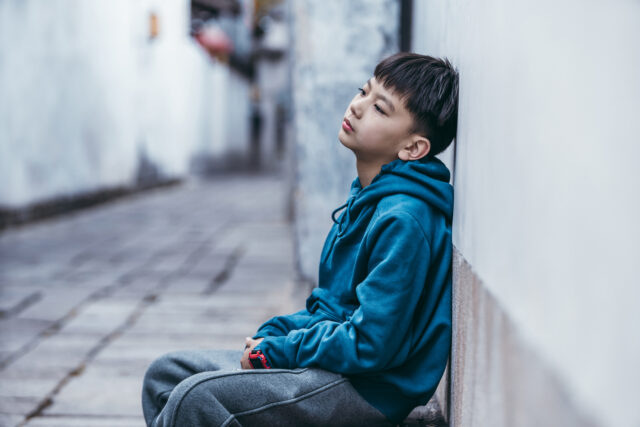 How to Help Kids Who Are Lonely
What parents can say to kids who are struggling socially and how they can help
How to Help Kids Who Are Lonely
What parents can say to kids who are struggling socially and how they can help
-
 How to Help Your Teen Through a Breakup
Powerful emotions plus social media make teen breakups messier than ever.
How to Help Your Teen Through a Breakup
Powerful emotions plus social media make teen breakups messier than ever.
-
 Complete Guide to Managing Behavior Problems
When children struggle with their behavior, it can have a negative impact on everyone in…
Complete Guide to Managing Behavior Problems
When children struggle with their behavior, it can have a negative impact on everyone in…
-
 Should Kids Take Mental Health Days?
When taking a break is helpful (and when it's not)
Should Kids Take Mental Health Days?
When taking a break is helpful (and when it's not)
-
 Starting Middle School
What your child might face and how you can help
Starting Middle School
What your child might face and how you can help
-
 Helping Children Cope After a Traumatic Event
Tips for supporting children with trauma
Helping Children Cope After a Traumatic Event
Tips for supporting children with trauma
-
 Metacognition: How Thinking About Thinking Can Help Kids
A powerful skill for building resilience
Metacognition: How Thinking About Thinking Can Help Kids
A powerful skill for building resilience
-
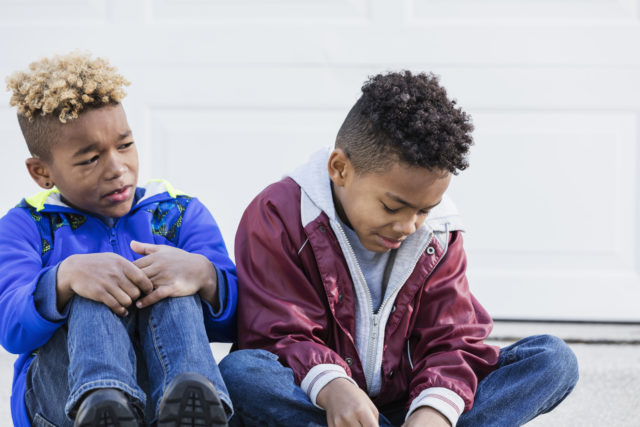 Teaching Kids How to Deal With Conflict
Tips for building lifelong skills
Teaching Kids How to Deal With Conflict
Tips for building lifelong skills
-
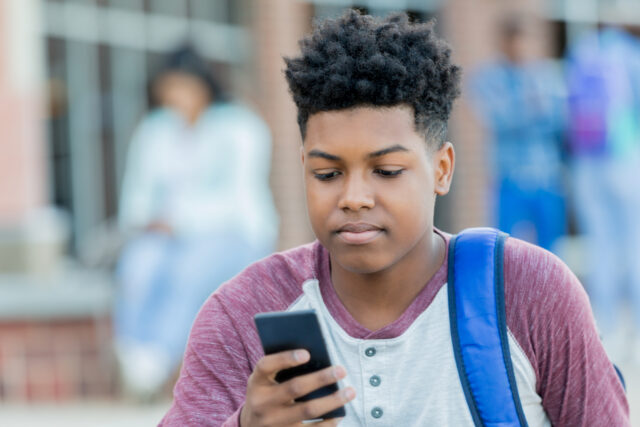 How Using Social Media Affects Teenagers
Experts say kids are growing up with more anxiety and less self-esteem.
How Using Social Media Affects Teenagers
Experts say kids are growing up with more anxiety and less self-esteem.
More Related