Emotional boundaries are the limits that protect each person’s right to their own thoughts, feelings, values, and decisions. In families, healthy boundaries allow children to develop independence while helping parents avoid taking responsibility for emotions or choices that belong to their child.
Maintaining Emotional Boundaries as a Parent
Maintaining Emotional Boundaries as a Parent
The importance of respecting both your child’s autonomy and your own
Clinical Expert: Megan Ice, PhD
Key Takeaways
-
Parents can have trouble recognizing when they are overstepping emotional boundaries with their kids — and when they’re letting their kids overstep their boundaries.
-
When parents try to exert control over their child’s thoughts and feelings, it can prevent their child from developing important coping skills.
-
Healthy boundaries go both ways. Children need privacy and autonomy, and parents need limits around respect, emotional support, and decision-making.
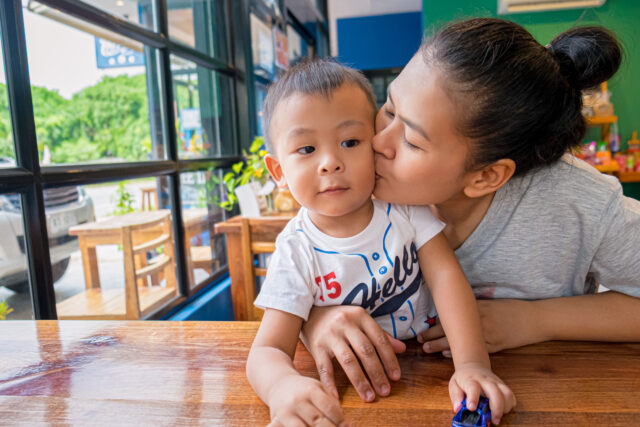
Parents often emphasize to children the importance of respecting others’ boundaries. Don’t tickle another kid if they say they don’t like it, for example. Don’t kiss someone unless they welcome it. But within the family, we can fail to notice our own difficulty setting and respecting boundaries with our children, especially emotional boundaries.
What are emotional boundaries
Emotional boundaries refer to an individual’s sense of autonomy and ability to control how they think, feel, and engage with others. Those boundaries are crossed either when you try to control someone else’s thoughts or feelings or they try to control yours.
Difficulty setting your own and respecting others’ emotional boundaries often comes from a place of care and concern. Parents are usually concerned that their child is not going to make safe choices or are trying to protect their child from distressing emotions. But the intrusion can have a negative impact on children’s emotional development as well as parents’ mental health, especially when it’s done repeatedly. Everyone has boundaries, even parents, and it’s important for kids to learn that.
How parents overstep their child’s emotional boundaries
Parents can inadvertently encroach on their child’s right to their own thoughts and feelings through:
- Over-involvement in children’s academic and social life: Your child has a whole life outside the home, and it can be anxiety-provoking to trust them to manage their homework, advocate for themselves with teachers, and navigate conflicts with peers. It can alleviate your anxiety to get involved, but that can feel highly intrusive to your child. For example, if your kid feels snubbed by a friend, you might feel the urge to contact that friend’s parent to try to smooth things over. However, over-involvement in these tasks can prevent your kid from developing the skills they need to manage challenging situations successfully and can impact their confidence in their ability to cope independently.
- Overconcern to protect your child’s safety: Fears that something negative will happen to your child are understandable, but aggressive monitoring can backfire. This can include strict control over the ingredients in your teen’s food, the information they consume online, or the activities they do. This may temporarily alleviate anxiety about the child’s health and safety but it can lead to resentment and rebellion.
- Ignoring or rejecting children’s requests for privacy: It is normal for children and adolescents to want more privacy as they mature, from showering alone to keeping a private diary. Unless your child engages in an activity that suggests they are being unsafe, it is important to trust your child and let them decide what to share with you.
- Sharing private information without the child’s permission: Parents telling anecdotes about their children, much to their kids’ embarrassment, is hardly new. However, that sharing now includes photographs and videos posted on social media that is broadcast far beyond close friends. It is important to include your child in decisions about what information is shared with others (excluding, of course, medical professionals). When in doubt, consider what information you would feel comfortable with them sharing about you.
- Telling children what is or isn’t acceptable to value, think, or feel: Many parents, in an effort to help their child feel better, say things like, “Don’t worry about that,” or “You can’t think that way.” These seemingly innocuous phrases can come across as attempts to control how the child feels. We can forget that kids are real people just like adults. And if they’re mad or upset about something, they want to be able to feel those feelings, not be told that that their feelings are wrong.
How parents fail to set their own emotional boundaries
Letting kids change your own values, thoughts, and feelings can also be unhealthy. Here are some common ways in which parents fail to set their own boundaries:
- Allowing your child’s thoughts and feelings to influence your own too much: Your child may act like it will be the end of the world if they don’t get into the right college. If their anxiety becomes your anxiety, then it’s going to be very hard for you to encourage your kid to have fun on the weekend or to go to bed with work left undone. What they need you to do is validate their feelings but challenge those thoughts and help them to relax.
- Implying that your child is responsible for how you feel: As a parent, your child’s well-being is your priority, and your emotional state is affected by your child’s behavior. But phrases like, “You are making me crazy” or “I cannot cope with one more word from you” unintentionally suggest that the child has control over your feelings. It’s not healthy for children to feel that they are responsible for your well-being.
- Depending on your child for emotional support: If you’re a parent under stress and you’re not getting support elsewhere, it makes sense that you’re going to vent to a child. It’s not necessarily meant to burden a kid with financial stressors or relationship drama, and the child might be a sympathetic ear. But it blurs the boundaries between the parent role and the kid role, and that often causes difficulties for the kid in accepting parental authority in other domains. If they see themselves as equals in terms of emotional support, then they might think, “Why can you tell me what to do?”
- Sharing age-inappropriate information: Many children want to be treated as older than they are (at least in certain ways). So they might request information about finances, romantic relationships, or family stressors that are inappropriate for their age. Although it can be tempting to share, it is not helpful long-term. It may alleviate the child’s current anxiety (and stop the nagging), but it will impair their ability to respect boundaries as well as interfere with them just being a kid.
- Difficulty saying no: If you’re exhausted, the last thing you want is an argument. One way to avoid an argument is to say yes to your kid’s requests to buy a toy, stay up 15 more minutes, or have a different dinner. If you have boundaries around what you will spend, how much sleep you need, or what you will cook, you are still a good parent. Sticking to your limits teaches your child to accept other people’s boundaries without whining or threats.
- Allowing your child to treat you unkindly: Many parents allow their children to treat them in ways they would never tolerate from another person. This includes calling the parent mean or profane names, hitting them, or disregarding their needs (for money, sleep, leisure time, etc.). Allowing this kind of behavior prevents the child from learning how to respect boundaries and tolerate the emotions they experience when they face them.
Factors that contribute to boundary concerns
There are specific circumstances that can make it difficult for a parent to know where the appropriate boundaries are. They include a child’s late development, psychiatric challenges, and history of unsafe choices. For example, a child may have delays in language, executive functioning, or social and emotional skills. These things can make it challenging to determine how involved you need to be in your child’s daily life and how much independence they can handle.
- Poor risk assessment and impulsivity: Many disorders can impact children’s ability to think clearly, regulate emotionally, and act safely. For example, a teen experiencing a manic episode may overestimate their abilities, underestimate risk, and act impulsively. Or a child with ADHD might be hard to control on crowded city streets or in restaurants, so you avoid taking them out or letting them do activities on their own with friends.
- Lack of confidence: Anxious children may underestimate their abilities and request continued support past when they are capable of independence. For example, a socially anxious child may ask their parent to order for them at a restaurant or keep track of their homework assignments. When a parent accommodates these requests, it confirms their belief that they still need help.
- Executive functioning deficits: Children who struggle with executive functioning may need more scaffolding to complete daily self-care tasks than other kids their age. This can look like parents providing frequent reminders of assignments, events, or even hygiene tasks — as well as cleaning their room for them long past when an child with ADHD should be doing it themselves. Consider how you can scaffold the skills (like packing their backpack!) without doing tasks for them, and gradually remove the supports over time.
- History of struggling to successfully navigate tasks: A child’s history of poorly handling a responsibility (ex., safe use of technology, completion of homework, brushing teeth) often reduces parents’ confidence in the child’s abilities and increases their inclination to step in. Although extra supervision and support may be needed initially, it is important to reassess your child’s abilities over time as they can learn and grow if you let them!
How to get better at boundaries
Once you have recognized the challenges in respecting your child’s boundaries and protecting your own, the next step is to figure out what those boundaries are.
- Identify your boundaries: What things are most important to support your child’s growing independence and sense of autonomy? What boundaries do you need to set to protect your own mental health? Consider what level of involvement you want to have in their academics, friendships, emotion regulation, and appearance and what you want to disclose to them about your own relationship, emotions, or work.
- Practice setting these boundaries: It is much easier to set a boundary when you are not forced to make the choice with a child’s puppy dog eyes looking at you. Rehearse how you will say no, decline to share certain information, or respond to an anxiety-provoking situation. This can prepare you to respond more effectively in a moment of conflict.
- Share your reasons for boundaries: Children can be quick to interpret lack of boundaries as “more caring,” but being consistent in language around why boundaries are being set can help prevent this. When setting a boundary, it is helpful to couch it in care. For example, “I care about you enjoying your childhood, so I do not feel comfortable sharing with you about our family’s finances.”
When kids want more independence than you think they’re ready to handle, identifying steps toward their goal can be effective. Giving them opportunities to show maturity, with success at one step leading to more responsibility, can help you trust your child with greater independence. What can your kids show you that will help you feel confident in their ability to manage their emotions themselves or make well thought-out decisions?
Kids also need to recognize that they sometimes overestimate their own abilities. There are times they have not assessed risk accurately and still need their parents. It is important to teach your child that you should be alerted if they are experiencing something that is unsafe or concerning (such as a friend talking about suicide or sharing an inappropriate photo). Discussions with your kid can sort out how to work toward new milestones and help everybody feel confident that they have the skills to do it.
Modeling a healthy respect for boundaries will set your child up to establish their own and respect others’ boundaries throughout their life.
Frequently Asked Questions
Healthy emotional boundaries support children’s confidence, autonomy, and ability to solve problems on their own. They also protect parents’ well-being by preventing them from becoming overly responsible for their child’s feelings, worries, or decisions.
Common signs include getting overly involved in a child’s friendships or school life, refusing age-appropriate privacy, sharing personal information without permission, or telling a child what they should think or feel. While these behaviors often come from a place of love and concern, they can undermine a child’s confidence and independence.
Parents can start by considering where their child is developmentally and what level of support versus independence is appropriate. A good guideline is to provide enough structure to keep children safe while gradually giving them more responsibility and privacy as they demonstrate readiness.
Last reviewed or updated on July 10, 2026.
Learn more about our Family Resource Center and our editorial mission.
References
The Child Mind Institute publishes articles based on extensive research and interviews with experts, including child and adolescent psychiatrists, clinical psychologists, clinical neuropsychologists, pediatricians, and learning specialists. Other sources include peer-reviewed studies, government agencies, medical associations, and the latest Diagnostic and Statistical Manual (DSM-5). Articles are reviewed for accuracy, and we link to sources and list references where applicable. You can learn more by reading our editorial mission.
-
Kins, Evie, Bart Soenens, and Wim Beyers. "'Why Do They Have to Grow Up So Fast?’ Parental Separation Anxiety and Emerging Adults’ Pathology of Separation-Individuation.” Journal of Clinical Psychology 67, no. 7 (2011): 1-18.
https://doi.org/10.1002/jclp.20786 -
Marusak, Hilary A., Moriah E. Thomason, Kelsey Sala-Hamrick, Laura Crespo, and Christine A. Rabinak. “What’s Parenting Got to Do With It: Emotional Autonomy and Brain and Behavioral Responses to Emotional Conflict in Children and Adolescents.” Developmental Science 21, no. 4 (2018): e12605.
https://doi.org/10.1111/desc.12605 -
Scharf, Miri, and Limor Goldner. “‘If you really love me, you will do/be…’: Parental Psychological Control and Its Implications for Children's Adjustment.” Developmental Review 49 (2018): 16-30.
https://doi.org/10.1016/j.dr.2018.07.002 -
Van Petegem, Stijn, Gillian Albert Sznitman, Joëlle Darwiche, and Grégoire Zimmermann. “Putting Parental Overprotection Into a Family Systems Context: Relations of Overprotective Parenting With Perceived Coparenting and Adolescent Anxiety. Family Process 61, no. 2 (2022): 792–807.
https://doi.org/10.1111/famp.12709
Topics

Megan Ice, PhD
Megan Ice, PhD
Megan Ice, PhD, is a psychologist in the Mood Disorders Center at the Child Mind Institute. Her professional experience centers … Read Bio
Was this article helpful?
Related Reading
-
 What’s Wrong With Helicopter Parenting?
Sometimes obstacles are actually a good thing
What’s Wrong With Helicopter Parenting?
Sometimes obstacles are actually a good thing
-
 Raising Confident, Independent Children
How the scaffold parenting method empowers growth
Raising Confident, Independent Children
How the scaffold parenting method empowers growth
-
 Helping Kids Make Decisions
When to offer support — and when to step back
Helping Kids Make Decisions
When to offer support — and when to step back
-
 Complete Guide to Managing Behavior Problems
When children struggle with their behavior, it can have a negative impact on everyone in…
Complete Guide to Managing Behavior Problems
When children struggle with their behavior, it can have a negative impact on everyone in…
-
 Teaching Kids About Boundaries
Why empathy and self-awareness play a major role
Teaching Kids About Boundaries
Why empathy and self-awareness play a major role
-
 What Are the Earliest Signs of Autism?
Signs of autism in infants and toddlers can be easy to miss — unless you…
What Are the Earliest Signs of Autism?
Signs of autism in infants and toddlers can be easy to miss — unless you…
-
 What Is Social and Emotional Learning?
How SEL programs help kids succeed in school
What Is Social and Emotional Learning?
How SEL programs help kids succeed in school
-
 Choosing a Parent Training Program
How to tell which one is right for you
Choosing a Parent Training Program
How to tell which one is right for you
-
 Should Kids Take Mental Health Days?
When taking a break is helpful (and when it's not)
Should Kids Take Mental Health Days?
When taking a break is helpful (and when it's not)
-
 Helping Girls Deal With Unwanted Sexual Attention
How parents can arm daughters to protect both their safety and their boundaries
Helping Girls Deal With Unwanted Sexual Attention
How parents can arm daughters to protect both their safety and their boundaries
-
 How to Protect Kids During a High-Conflict Divorce
Experts discuss ways to minimize harm and maintain stability
How to Protect Kids During a High-Conflict Divorce
Experts discuss ways to minimize harm and maintain stability
More Related