Nonverbal learning disorder, or NVLD, is a learning disorder in which kids have trouble with visual-spatial processing, which involves understanding and acting on visual information. NVLD can affect a child’s academic performance, physical coordination, and social interactions.
What Is Nonverbal Learning Disorder (NVLD)?
What Is Nonverbal Learning Disorder (NVLD)?
Difficulty with visual-spatial processing affects kids academically, socially, and physically
Clinical Experts: Amy Margolis, PhD , Amie Wolf, PhD
en EspañolKey Takeaways
-
Nonverbal learning disorder (NVLD) affects pattern recognition, concept learning, and organizing information, rather than reading skills like other learning disorders.
-
Children with NVLD struggle with social cues, visual-spatial awareness, advanced math concepts, and executive functioning skills like planning and organization.
-
NVLD often becomes noticeable around fifth grade when education shifts from memorization to concept application, but with proper support, affected children can catch up.
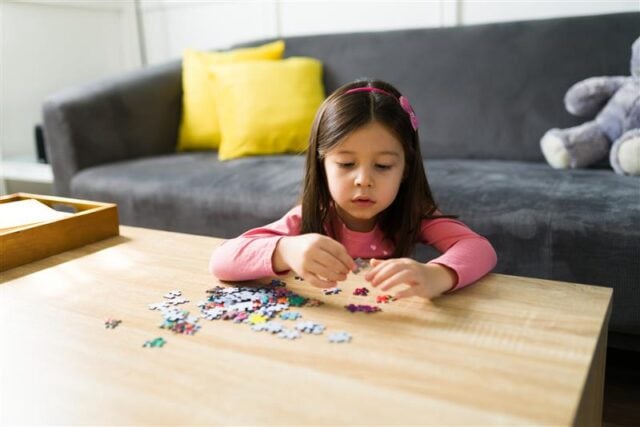
Nonverbal learning disorder (NVLD) is a condition that involves difficulty processing what’s called visual-spatial information — the skills used to do things like putting together a puzzle or reading a diagram.
It’s called nonverbal learning disorder to distinguish it from learning disorders that involve decoding language, including dyslexia (the most common learning disorder), which involves difficulty learning to read.
But the name can be confusing, prompting some people to assume that children with NVLD are nonverbal — that is, they don’t speak. On the contrary, kids with NVLD have typical or, often, exceptional verbal ability. And they don’t have trouble learning to read. Instead, they have difficulty with a lot of different things that involve visual-spatial processing.
What is visual-spatial processing?
Visual-spatial processing involves the brain’s ability to interpret and respond to visual input, including where things are in space.
Difficulty with these skills can affect a child’s ability to do a surprising variety of things: understand patterns, read charts or graphs, organize ideas (or things), notice social cues, navigate a space or a neighborhood, and coordinate movement.
As a result, kids with NVLD have a range of challenges with academics, social interaction, and physical coordination. They might struggle with things as seemingly disparate as catching a ball, remembering where they left something, and solving a math problem.
NVLD isn’t an official diagnosis in the DSM-5. But it’s been recognized for more than 60 years, and it affects an estimated 3 to 4 percent of kids in North America.
Recently, a group of NVLD experts, led by Amy Margolis, PhD, a neuropsychologist and professor of psychiatry and behavioral health at The Ohio State University, have proposed reframing NVLD as developmental visual-spatial disorder (DVSD). The goal is to make it clearer that the core problem that underlies NVLD symptoms is visual-spatial processing. They are also spearheading an effort to get DVSD accepted as a disorder in the DSM, which will make it easier for kids to be diagnosed and get the support they need.
Symptoms of NVLD
Dr. Margolis breaks down visual-spatial processing into eight specific skills that children with NVLD can have difficulty with.
Some kids are affected in just a few of them. Others struggle with all of them. As a result, children with NVLD can be very different from each other. With each child, the first step to getting support for them is to figure out exactly what kinds of problems they are facing.
Here, Dr. Margolis describes the familiar functions that depend on each of these skills:
Visual-spatial construction
This includes things like putting together puzzles or models, building with blocks or LEGOS, and drawing or copying shapes. It could also mean difficulties putting on clothes or shoes correctly or making a bed. And it could include problems with forming mental images when hearing or reading a book.
Visual-spatial memory
This involves things like remembering layouts of a school, a neighborhood, a local store, or a friend’s home. It could include difficulty remembering where they left possessions like a book bag or bike.
Visual-spatial estimation and/or reasoning
This could include problems with estimating length, size (whether one object is bigger than another), area, quantity, distance, or how fast something is moving (such as knowing when it is safe to cross the street). It could also involve challenges with efficiently using space on a piece of paper or filling out a worksheet.
Interpreting information presented pictorially
This involves making sense of figures, diagrams, graphs, or pie charts. It also impacts the ability to grasp how pictures in a storybook relate to the story, to follow instructions that use figures without text, to use a map, and to tell time from an analog clock.
Three-dimensional thinking
This involves things like imagining how something looks when rotated or visualizing how things will fit in a defined space, such as packing a book bag or suitcase. It could include problems with math that require thinking about three-dimensional shapes (e.g., cones, cubes, spheres) or volume, and problems with mental route finding.
Visual-spatial scanning, tracking, and/or searching
This category includes having trouble physically maneuvering in situations in which people or things are moving in different directions (like playing a team sport). It could also lead to difficulty keeping one’s place when reading dense blocks of text, tracing shapes, coloring within the lines, or cutting along a straight line.
Self-orientation
This includes standing too close or too far away from people in conversations, bumping into people or things in tight spaces, and having a poor sense of direction. It also includes problems orienting to or finding one’s way around big stores or open spaces.
Noticing physical attributes of people, objects, or physical surroundings
This involves such things as not noticing noteworthy physical features of a person (e.g., a raised eyebrow), when shoes or socks are mismatched, or if a picture or painting is askew. It also includes trouble detecting differences in an object or scene.
How does NVLD affect functioning?
Because children vary in which visual-spatial skills they have problems with, there is a wide range of how impaired they are. Some have serious problems keeping up in school. But others might only appear to be socially awkward or have trouble with executive functions — organization and planning. They might be chronically unable to find things in their book bag or struggle with breaking down a project into smaller steps or conceiving the steps that need to be taken to get something done.
Social awkwardness can cause NVLD to be confused with autism, although the source of social challenges in NVLD is different from autism. Social challenges of kids with NVLD can stem from difficulty understanding things like personal space and social patterns.
Kids with NVLD can also be diagnosed with autism or ADHD — all three are neurodevelopmental disorders, and they frequently co-occur.
Because NVLD is a neurodevelopmental disorder, it’s present throughout a child’s development. But signs of NVLD change as children grow. For younger children, it affects how they put together a puzzle, draw a picture, or catch a ball. By the time they are in high school it affects their academic, social, and physical functioning more broadly. At each developmental stage, kids encounter increasingly complex demands on their visual-spatial skills, so their ability to function is more affected.
Early signs of NVLD
The earliest signs that a child has NVLD are often overlooked, explains Amie Wolf, PhD, a neuropsychologist who studies NVLD. Since they have typical, or even exceptional verbal ability, it’s easy to miss the early trouble preschoolers might be having with visual-spatial skills — clumsiness or trouble building with blocks or using crayons or scissors.
In the first few years of elementary school, where the focus is on learning to read and basic arithmetic, kids with NVLD may not have trouble keeping up. They are good at decoding language and memorizing words and numbers.
NVLD in middle school
Children are more often diagnosed with NVLD beginning in the third or fourth grade, when the focus shifts from learning to read to reading comprehension, and even more in middle school. “Middle school is the time you start to see a lot of the problems ramp up because not only are the executive functioning demands increasing, but so are the academic demands,” says Dr. Wolf.
Expository writing, which requires organizing ideas, becomes a problem. Math also becomes more challenging, as students have to understand things like place value, multi-step problems, fractions, geometry, and graphs, and they may have more apparent problems. Science classes require students to follow lab procedures.
Middle schoolers are also expected to navigate a more complex schedule, change classrooms, and take more responsibility for organizing their work.
She notes that NVLD can affect kids in gym class or in team sports, where they have challenges in judging where other players are in space. “Often we find them avoiding group sports or team sports, or they’ve tried it and they really are either terrible at it or excluded from it.”
NVLD in high school
In high school, as both academics and social life become more complex, more children are diagnosed with NVLD. But kids who have outstanding verbal skills may continue to be overlooked even then, since few teachers, parents, and others who work with children are aware of NVLD. Their visual-spatial challenges can be misidentified as attention problems, laziness, or lack of motivation.
Dr. Wolf notes that when kids are diagnosed as late as high school, they often feel that they finally understand a lot of things that have been troubling them for a long time. “When you give people this diagnosis, they often say, ‘All these things kind of click for me now, things that happened to me, and now I get why.’”
But, she adds, while the diagnosis can come as a relief, there are emotional costs to the delay. “When we’re talking about identification in high school or later in life, a lot of times kids have lived a life of feeling very misunderstood, because no one really knew what was going on,” she explains.
Because this delay can result in kids developing anxiety, depression, or harmful behaviors like substance use or self-harm, Dr. Wolf recommends that parents whose children show signs of visual-spatial challenges seek a comprehensive neuropsychological evaluation to discover what they are struggling with.
Frequently Asked Questions
Both children on the autism spectrum and children with NVLD may have trouble with social skills, but they are based on different deficits. Children with NVLD can also be diagnosed with autism as well.
There are eight types of visual-spatial skills that can be a problem for children with nonverbal learning disorder, including visual-spatial memory, visual-spatial estimation, three-dimensional thinking, and self-orientation. Because children vary in which visual-spatial skills they have problems with, there is a wide range of how impaired they are. Some have serious problems keeping up in school. But others might only appear to be socially awkward or have trouble with executive functions like organization and planning.
Last reviewed or updated on February 9, 2026.
Learn more about our Family Resource Center and our editorial mission.
References
The Child Mind Institute publishes articles based on extensive research and interviews with experts, including child and adolescent psychiatrists, clinical psychologists, clinical neuropsychologists, pediatricians, and learning specialists. Other sources include peer-reviewed studies, government agencies, medical associations, and the latest Diagnostic and Statistical Manual (DSM-5). Articles are reviewed for accuracy, and we link to sources and list references where applicable. You can learn more by reading our editorial mission.
-
American Psychiatric Association. Diagnostic and Statistical Manual of Mental Disorders: DSM-5. 5th ed. Arlington, VA: American Psychiatric Publishing, 2013.
-
Child Mind Institute. "Rachel Ganz, PhD." Accessed October 29, 2024.
https://childmind.org/bio/rachel-ganz-phd/ -
Margolis, Amy E., Jessica Broitman, John M. Davis, and others. "Estimated Prevalence of Nonverbal Learning Disability Among North American Children and Adolescents." JAMA Network Open, April 10, 2020.
https://jamanetwork.com/journals/jamanetworkopen/fullarticle/2764298#google_vignette
Tagged with
Learning Disorders
Topics

Caroline Miller
Caroline Miller
Caroline Miller is Editor-at-Large at the Child Mind Institute. She was the editorial director of the organization for more than … Read Bio
Was this article helpful?
Related Reading
-
 Quick Guide to Nonverbal Learning Disorder (NVLD)
Nonverbal learning disorder (NVLD) is a neurodevelopmental condition that involves difficulty processing visual-spatial information —…
Quick Guide to Nonverbal Learning Disorder (NVLD)
Nonverbal learning disorder (NVLD) is a neurodevelopmental condition that involves difficulty processing visual-spatial information —…
-
 How Can We Help Kids With Nonverbal Learning Disorder?
We can help teach kids the scripts they aren't picking up intuitively
How Can We Help Kids With Nonverbal Learning Disorder?
We can help teach kids the scripts they aren't picking up intuitively
-
 Inside an Evaluation for Learning Disorders
Dr. Matthew Cruger walks us through the process
Inside an Evaluation for Learning Disorders
Dr. Matthew Cruger walks us through the process
-
 A New Take on Nonverbal Learning Disorder (NVLD)
Why it’s being reframed as developmental visual-spatial disorder (DVSD)
A New Take on Nonverbal Learning Disorder (NVLD)
Why it’s being reframed as developmental visual-spatial disorder (DVSD)
-
 Signs of NVLD at Different Ages
How the symptoms emerge in children with nonverbal learning disorder
Signs of NVLD at Different Ages
How the symptoms emerge in children with nonverbal learning disorder
-
 When Problem Behavior Masks a Learning Disability
How to tell if a child who’s acting out actually needs help in school
When Problem Behavior Masks a Learning Disability
How to tell if a child who’s acting out actually needs help in school
-
 BPD vs Bipolar: Why They Are Often Confused
How to distinguish borderline personality disorder from bipolar disorder in teens
BPD vs Bipolar: Why They Are Often Confused
How to distinguish borderline personality disorder from bipolar disorder in teens
-
 Bipolar Disorder: Why It’s Often Misdiagnosed
And how behavioral treatment, along with medicine, improves outcomes
Bipolar Disorder: Why It’s Often Misdiagnosed
And how behavioral treatment, along with medicine, improves outcomes
-
 Do Kids Grow Out of Learning Disorders?
Learning disorders don’t go away, but they can get much easier to manage
Do Kids Grow Out of Learning Disorders?
Learning disorders don’t go away, but they can get much easier to manage
-
 What Are the Different Kinds of Learning Disorders?
How they’re recognized and diagnosed
What Are the Different Kinds of Learning Disorders?
How they’re recognized and diagnosed
-
 How to Spot Dyscalculia
When math difficulties mean something more
How to Spot Dyscalculia
When math difficulties mean something more
More Related