Animals, Nature Offer Children a Fresh Start
Two special-needs schools help kids succeed using horses, dogs, sheep — even injured birds of prey
Clinical Expert: Savanna Kiefer, PsyD
en EspañolBy the time Brady entered Green Chimneys, a therapeutic school in Brewster, New York, he and his family had been on a treacherous and bewildering path for all of his 10 years.
Brady’s parents, Anne and Paul, say that their son was a gentle and sweet boy, but his explosive meltdowns, from a very young age, had them fearing for everyone, especially Brady and younger sister Lynne. “He wasn’t deliberately violent toward people,” Anne says, “but he was wild and random. The potential for someone to get hurt was extreme.”
Soon Brady was scrambling onto kitchen counters, disabling the “childproof” locks, and hurling heavy cans of food indiscriminately. Anne and Paul emptied the kitchen cabinets and nailed the doors shut, built a fence around the yard, and removed furniture he could move to try to climb out a window. “But even when you controlled his environment,” Anne says, “he would hurt himself. It was the last straw.”
Brady got a complicated set of diagnoses, including autism and ADHD. When his public school failed to provide mandated services, Anne and Paul were able to get their son into Green Chimneys, and things started to turn around for him.
While most young children and their parents will never face such extreme challenges, Brady’s story is all too familiar to the staff at schools like Green Chimneys, which provides residential services as well as a day program, and the Children’s Village in Dobbs Ferry, a school that offers short-term residential programs to more than 1,000 children and youth annually.
Green Chimneys and Children’s Village, or CV, are both are part of an innovative movement that incorporates animals and a natural setting into their therapeutic programs, offering a dramatically fresh start to children who truly need one.
Animals calm, teach kids
Founded by Sam B. Ross Jr., PhD, in 1947, Green Chimneys serves nearly 250 students, kindergarten through 12th grade as part of a therapeutic day program. Most are boys, between 8 and 15. Of those served 88 are enrolled in the residential program, which offers psychiatric treatment, including medication. Spread over some 500 acres on its two Putnam County campuses, Green Chimneys uses farm and wildlife programs as a key piece of the overall treatment model for children with social, emotional, and behavioral challenges, and diagnoses including anxiety disorders, ADHD, autism spectrum disorder, PTSD, and reactive attachment disorder.
Multiple studies have shown that interacting with animals calms children on the autism spectrum and improves their social-emotional functioning. Some researchers propose that contact with animals boosts oxytocin, a brain chemical involved in bonding and social interaction that can also help regulate the body’s response to stress.
By the time kids like Brady arrive at Green Chimneys, they lack self-confidence and they and their families are stressed to the max, having exhausted other educational and therapeutic interventions, says Michael Kaufmann, who supervises Green Chimneys’ animal and horticulture programs. Because these kids have been through countless evaluations, the kids “don’t trust very easily,” he adds.
But then they spot the farm, the barn, and the wildlife rehabilitation center, home to 50 injured birds of prey, and it’s like no school they’ve ever seen. “Our role is to take about 300 animals, from horses to dogs to wildlife — not counting bees — and integrate them into the clinical and recreational life of the students in our care,” he says. The animal handlers are part of the therapeutic team, along with psychiatrists, psychologists, therapists, and social workers.
Kids are motivated to participate more in activities when it involves spending time with animals, notes Savanna Kiefer, PsyD, a psychologist in the Autism Center at the Child Mind Institute. And that can lead to more learning.
Working with animals offers some surprising ways to teach social skills, adds Dr. Kiefer. For kids on the autism spectrum, who have a difficult time reading nonverbal body language, learning through animals makes it easier. “Animals’ body language is bigger and easier to read: a dog’s tail wagging when it’s happy, putting its paw on you when it wants more pets, rolling over on its belly means it wants belly rubs.”
Kaufmann demonstrates one exercise in which he shows students a large board with sketches of five horses’ heads, each with a different expression. Asked to pick out the angry horse, two visitors chose one with its head down before one changed her mind: “No, it’s the one with the mean-looking eyes.” She was right to choose that picture but had picked up on the wrong sign. It was the horse’s laid-back ears, not eyes, that said “equine anger.” The quiz is a strong reminder of how hard it can be for these kids to read people’s emotions based on facial expression and even body language.
Helping animals helps kids feel competent
Kaufmann says there are a couple of key reasons for Green Chimneys’ success, the first being that “these kids, who are used to being the centers of concern and cared for by adults, can become these animals’ caretakers. They love being useful and involved in that way.”
For instance, when students work in the tack room, everything is clearly organized and students are responsible for all their horses’ equipment, using it properly and putting it back where it belongs.
Kaufmann notes that each of the animal areas has a role. “The goats, sheep, and rabbits all have names, they’re fairly gentle, and you can cuddle and pet them, which a lot of kids look for in animals.” The bird center offers a stark contrast to the fuzzier animals, and an important message. “Wild animals aren’t ours,” Kaufmann says. While the goal is to rehabilitate and release them back into the wild, many, like the blind owl with the broken beak, will live out their days in captivity, unnamed out of respect.
“The birds also illustrate that they can be healthy and strong despite a disability or injury,” he adds. They have “claws and beaks and they don’t need people in the same way, which suits children and teens “who are more at a distance. A lot of kids on the spectrum don’t particularly like physical contact.”
Kaufmann notes that animals teach just by being who they are: “Let’s say a little kid needs to catch a donkey in a halter. If the child runs full speed, the donkey runs. They learn that if you want to get the donkey, you have to calm down…take a breath…walk more slowly. Suddenly, a child who has a hard time doing that can start working on their emotional regulation skills because the motivation is there. They can see in the donkey if what they’re doing is working or not working.”
Animals don’t judge
Brady was one of the children who gravitated toward the safer, gentler animals. “First, it was a prairie dog that eventually became sick and died,” Anne says. “Then there was a large rabbit named Gobbles.” Brady was initially afraid of the horses, “but after walking a miniature horse, the staff built up his confidence and he was able to do therapeutic riding, which helped with his motor skills and coordination.”
The animals at Green Chimneys helped Brady build his confidence and enabled him to enjoy school for the first time. “They calm him,” his mother says. “He never really had friends. They were his friends. While he was taking care of them, he opened up. He loved going to the farm; that was his favorite job.”
Training service dogs
Students at Children’s Village have an opportunity to train dogs that will assist the disabled. The program is done through a nonprofit called Canine Rescue & Rehabilitation (K9 R&R).
Children’s Village has about 150 youth in its residential treatment center. That number includes foster kids with high behavioral challenges, kids involved with the justice system serving an alternate to detention sentence, and kids in the Jackson crisis residence. While the average stay in the residential treatment center is seven months, the Louis Jackson Rapid Intervention Center is a 30-day program, more restrictive than most units at CV, that is an alternative to hospitalizing children with psychiatric illnesses whose behavior may put them or others at risk. It is also where much of the animal assisted therapy takes place.
“There are kids who won’t talk to any of the staff but will spend time with dogs,” says Avril Lindsay, former director of the program. “They’re nurturing. They’ll respond to a kid, give kisses. And the kids love the reinforcement they get from dogs.”
She tells the bittersweet story of a boy who couldn’t go home for Christmas; his brother was in a foster family and he wasn’t welcome to join them. The boy lay on his belly, nose-to-nose with a therapy dog, and talked her through “missing” the holidays. What he said “exactly paralleled what he was feeling about not going home,” Lindsay says. “It was as if he counseled her into feeling better about his situation. It was amazing.”
Kids rely on dogs for calming strategies
Lindsay has six dogs working with kids full time, responding to crises and engaging them in therapy and recreation. Many of the kids have had no positive experiences with dogs, she notes. “Their only exposure prior to CV may have been via gangs and drugs. But they’ll leave saying, ‘I’m afraid of dogs but not these dogs; therapy dogs are so gentle.’”
And when kids put together their own strategies for coping when they return to the community, “most choose the dogs as something to help them calm down,” Lindsay says. “Dogs don’t judge or respond to how they look when they’re in crisis.”
One 17-year-old student, Anthony, said that when he was first picked to participate in the program, he “was actually terrified of the dogs,” he said. But by the second year, he felt it was such good experience, he volunteered.
“Dogs and the unique ways they learn are awesome,” he says. “I get to teach and they can help people with disabilities in their day-to-day life. Sometimes when you teach the dogs, you teach yourself. I feel like I’m doing something important, giving back by helping the veterans.”
Anthony has picked out a career that will play to his new strength, thanks to his dog training experience at CV. He’s motivated to study and do well on his Regent exams so that he may attend college and become a police officer with — what else? — the canine unit.
Learn more about our Family Resource Center and our editorial mission.
References
The Child Mind Institute publishes articles based on extensive research and interviews with experts, including child and adolescent psychiatrists, clinical psychologists, clinical neuropsychologists, pediatricians, and learning specialists. Other sources include peer-reviewed studies, government agencies, medical associations, and the latest Diagnostic and Statistical Manual (DSM-5). Articles are reviewed for accuracy, and we link to sources and list references where applicable. You can learn more by reading our editorial mission.
-
Beetz, Andrea, Kirsten Uvnäs-Moberg, Henri Julius, and Kurt Kotrschal. “Psychosocial and Psychophysiological Effects of Human-Animal Interactions: The Possible Role of Oxytocin.” Frontiers in Psychology 3 (2012).
https://doi.org/10.3389/fpsyg.2012.00234 -
Ward, Amanda, Nicole Arola, Amy Bohnert, and Rebecca Lieb. “Social-Emotional Adjustment and Pet Ownership Among Adolescents With Autism Spectrum Disorder.” Journal of Communication Disorders 65 (2017): 35-42.
https://doi.org/10.1016/j.jcomdis.2017.01.002 -
Wright, Hannah, Sophie Hall, Annette Hames, Jessica Hardiman, Richard Mills, and Daniel Mills. “Pet Dogs Improve Family Functioning and Reduce Anxiety in Children With Autism Spectrum Disorder.” Anthrozoös 28, no. 4 (2015): 611-624.
http://doi.org/10.1080/08927936.2015.1070003
Was this article helpful?
Related Reading
-
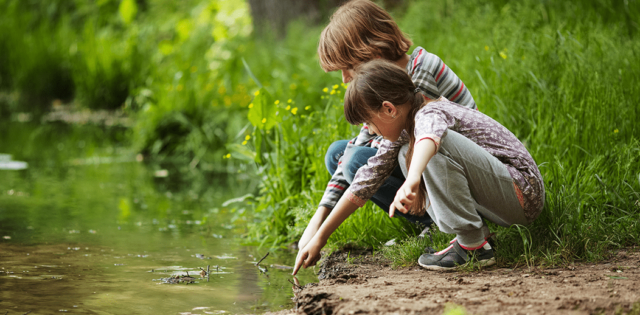 Ideas for Getting Your Kids Into Nature
How to make being outdoors fun and rewarding for kids inclined to stick to their…
-
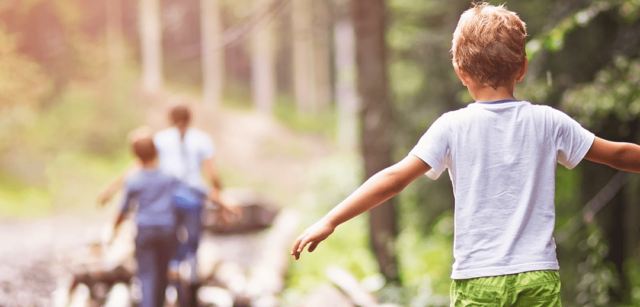 Why Kids Need to Spend Time in Nature
They may prefer to stick to their screens, but here's why getting outdoors matters
-
 Do Autism Behaviors Have Medical Causes?
Some persistent problem behaviors turn out to be treatable illnesses
-
 Complete Guide to Managing Behavior Problems
When children struggle with their behavior, it can have a negative impact on everyone in…
-
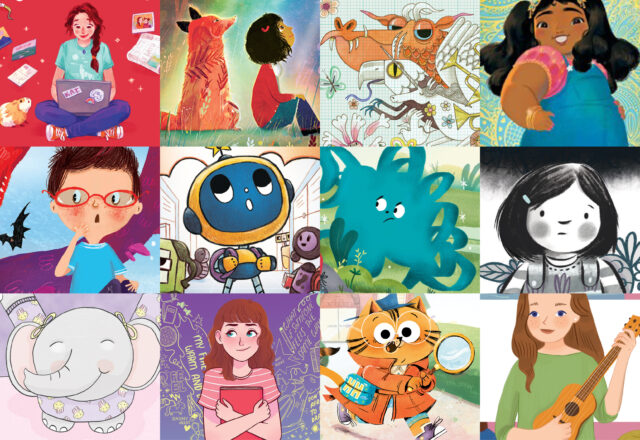 Top Children’s Books About Mental Health
Some of our favorite books for helping kids understand emotional and learning challenges
-
 Complete Guide to Autism
Autism spectrum disorder (ASD) is called a spectrum because autistic kids may have a wide…
-
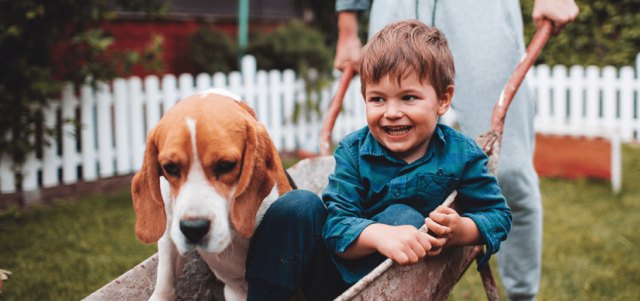 Animals Help Children Overcome Challenges
From dogs to horses, they're being used by innovative therapists to calm, motivate and teach…
-
 The Controversy Around ABA
Why some autism parents and advocates find fault with the therapy
-
 Helping Children Cope After a Traumatic Event
Tips for supporting children with trauma
-
 Complete Guide to Getting Good Care
When a child is struggling, or their behavior worries you, it can be hard to…
-
 Why Many Autistic Girls Are Overlooked
They often go undiagnosed because they don’t fit autism stereotypes and they mask symptoms better…