Experts have found there are benefits to parents watching TV with their child and talking about what they’re watching.
The Benefits of Watching TV With Young Children
The Benefits of Watching TV With Young Children
Screen time can be a valuable learning experience if you watch actively together
Clinical Experts: Matthew H. Rouse, PhD , Catherine Steiner-Adair, EdD
en EspañolWhat You'll Learn
- What are the benefits of watching TV with children?
- How can parents help kids learn from watching TV?
- What are some ways to use TV shows to start conversations with kids?
Quick Read
As parents, we have come to think that all TV is bad for kids. But experts have found there are benefits of watching TV if parents watch with their kids and talk about what they’re watching.
When it comes to educational shows like Sesame Street, watching with your child can help them learn more. Young kids learn from lots of back-and-forth interactions. So, asking your child about what they’re watching (and answering their questions) increases learning.
This can be true even when the show is not educational or even very good. A lot of shows use stereotypes like the “nerd” or the “dumb blonde girl.” When kids watch alone, they’re more likely to accept these ideas about people as true. But when parents watch with school-aged kids and point out these stereotypes, it teaches kids to question them. If you see someone in a show treating another person badly, hit pause. Then ask your child what they would do if they saw someone being mean like that or if someone was mean to them that way.
Starting to watch TV together when kids are young makes watching together both normal and fun. It also sets up a precedent that screen time is something that kids and parents share. That norm can be valuable as kids get older and might resist parents checking on what they’re watching.
Watching TV together can even be a way of bonding as a family. By asking kids open-ended questions about the show (“What would you do if that happened to you?”) or commenting on what you see (“She couldn’t tell her parents, but I hope you would tell us”), parents can make watching together into quality time for everyone.
Full Article
9 min read
As parents, we have come to think that screen time is bad for young children — or maybe that it’s an inescapable evil. We feel guilty about letting them watch what we fear is too much or the wrong kind of TV and other electronic media. But there’s a mounting body of evidence that if you are actually watching along with your preschool or elementary school-aged child, screen time might not be that bad. On the contrary, as long as you are an active participant, it can have multiple beneficial effects.
Enhancing learning from screen time
Learning for young children is driven by human interactions, explains Shelley Pasnik, director of the Center for Children & Technology. She leads a team that studies how the thoughtful use of technology can enhance learning. “What young kids need are a lot of experiences that are built on contingency, so a child does something and an adult says something in response. It’s a back-and-forth,” she says. It’s important that kids know what they do has an effect. “And they’re going to get a response.”
This kind of back-and-forth is called contingent engagement, and it’s something that can happen with a screen if a parent is participating. As a result, The American Academy of Pediatrics has dialed back its “no screens” policy for very young kids. “But,” says Pasnik, “it’s not just, okay, now everyone let your kids watch TV, you know, without the social component. It’s that social relationship that is so, so crucial. It’s less the relationship between the kid and the screen and instead it’s the child and the parent.”
Pasnik’s research has shown that when kids watch shows like PBS’s Peg + Cat, which teaches early math skills, with parents or caregivers they retain significantly more than when they watch alone. “The more parents were involved and used the strategies, the more likely kids were going to experience the benefits of the media,” she notes.
Watching media together also gives parent and child a shared language with which to communicate when they’re not watching, explains Matt Rouse, PhD, a clinical psychologist. “By really being involved you can get more mileage out of those lessons and adapt and use it in everyday life.”
It’s the same reason why psychologists doing cognitive behavioral training with young children include parents. “We have parents join our sessions so that they’re using the same terms for things,” says Dr. Rouse. “Then they can use that language outside in the world so that everything comes together more seamlessly.”
Encouraging active viewing
Adults, Pasnik says, can play an important role in modeling “active viewing” — that is, encouraging kids to actively engage with the content they’re seeing on screens. “Parents talking about what they’re seeing either during the experience or afterwards can be important. We’re constantly translating and interpreting what we see on a screen or a particular device so the more an adult can encourage conversation around that experience the deeper the experience becomes.”
Strategies that actively engage young children during screen time include asking open-ended questions. “Just encouraging conversation, to begin with,” she explains, “and also knowing to pause play, for example to ask questions, to get kids thinking about what they saw.”
Dr. Rouse has actually prescribed the “active viewing” of baseball games as a way of creating a closer connection within one of the families that he works with. “You don’t normally think of watching TV as ‘quality’ time,” says Dr. Rouse, “but here we’re looking for opportunities for this father to just get more one-on-one time with his son,”. Kids don’t necessarily respond well if a parent says, “Okay, turn off the TV. Let’s spend some time together.” But, says Dr. Rouse, “he could use it as an opportunity to kind of join the child in what he’s doing — make it an active process where you’re commenting on things together or even asking questions, like, ‘Oh, hey, catch me up. What’s going on here?’ ” So it’s less about what’s on the TV screen and becomes more of an interactive, social experience between parent and child.
The phenomenon has been so carefully studied that clinicians actually have a term for watching TV with your kid: It’s called co-viewing. “Co-viewing means you’re watching the same show. Your eyes are on the same screen,” explains Catherine Steiner-Adair, EdD, clinical psychologist, school consultant, author of The Big Disconnect and a research associate at the Harvard Medical School. “If you DVRed it or whatever you can push pause and say why did she just do that? Or say ‘Do you think this is what it takes to be popular? If someone said that to you, what do you think you’d do? I’d be scared,’ ” she says.
Dr. Steiner-Adair notes that it’s important not to lecture. “You don’t want to be saying, ‘Don’t ever let anybody talk to you like that!’ You can’t be too intense. Instead, Dr. Steiner-Adair suggests that parents practice role-playing with children:
“What would you say?”
“What could you say?”
“What should she have said?”
“I hope you’ll come tell us if anything like that happens.”
“She couldn’t tell her parents. I hope you’ll tell us.”
All of these are part of the open-ended question strategies of co-viewing. “You just want to put in those messages,” Dr. Steiner-Adair advises. “None of that happens if they’re in their room watching it by themselves.”
Helping kids learn to self-regulate
Making sure that your child is watching programs that teach the kinds of lessons you’d like your child to learn is another strong argument for co-watching. As kids get a little older, they begin to reflect on the behavior and decisions of characters on shows they watch, Pasnik says. “To go back to Peg + Cat, for example, it’s not just that kids are learning ordinal numbers and recognizing shapes. They’re also seeing how the lead character, Peg, deals with frustration when she is challenged in the way she approaches a problem. She counts backwards, you know, 5, 4, 3, 2, 1.”.
What Peg is doing is demonstrating emotional self-regulation, modeling for kids how to manage strong feelings. “We heard back from parents that kids are relating to that character not just at the mathematical level but they’re also picking up that same technique of self-regulation.”
When parents watch with their kids they can use strategies on the shows in the real world to coach kids on emotional regulation. It’s good for parent and child to be working from the same playbook. And PBS kids programming is crafted, with adds Dr. Rouse, “forty years of research on child development and the effect of different kinds of media on child development.”
Pointing out stereotypes
Geoffrey Perry, a fifth grade teacher at The Dalton School in Manhattan, sheepishly admits that he and his husband Gary have let their son Anthony watch cartoons on his iPad since he was little. “We had to get to work really early and he was really difficult to motivate and get dressed and get fed before we had to take him to daycare and then kindergarten and school,” Perry explains. “So the deep dark pact we made with the devil was to let him watch a cartoon on his iPad, and that was like his morning cup of coffee. And so I’m watching with him while I’m making breakfast and having my coffee.”
Anthony’s secret vice was a Barbie cartoon. “They sort of poke fun at the whole Barbie thing. They make fun of the fact that they can never can wear flats and that she’s had like 75,000 careers and no one knows her age,” says Perry. But Perry also found that he could talk to Anthony about the messaging in the show. “I’m always asking questions so that he sees some of the stereotypes and some of the sexist stuff that’s being said. Some of the soft cue sexism that he might unconsciously pick up.”
These days Anthony has graduated to sit-coms — mostly, says Perry, the Disney kind where you can “pretty much pull the standard characters off the shelf. There’s the geeky nerd — usually Asian or Indian — there’s always some sassy black girl, there’s always some ditzy blonde girl. And we do talk about those things. You know, ‘Why is the smart one always Indian and Asian?’ ” Anthony is not allowed to watch in his room or alone for that matter. “There’s always interaction while he’s watching,” Perry says.
Co-viewing from a relatively young age also sets up a precedent that screen time is something that kids and parents share — a precedent that can be valuable when kids get near adolescence, and could be resistant to sudden parental intrusion into their programing.
Frequently Asked Questions
When it comes to educational shows like Sesame Street, the benefit of watching TV with your child is that it can help them learn more. Young kids learn from lots of back-and-forth interactions. So, asking your child about what they’re watching (and answering their questions) increases learning.
Parents can help kids benefit from watching TV even when the show is not good. A lot of shows use stereotypes like the “nerd” or the “dumb blonde girl.” When kids watch alone, they’re more likely to accept these ideas. But when parents watch with them and point out stereotypes, it teaches kids to question them.
Watching TV with kids can be a way of bonding. By asking kids open-ended questions about the show (“What would you do if that happened to you?”) or commenting on what you see (“She couldn’t tell her parents, but I hope you would tell us”), parents can turn watching TV together into quality time.
Last reviewed or updated on May 15, 2024.
Learn more about our Family Resource Center and our editorial mission.
Topics
Juliann Garey
Juliann Garey is a journalist and novelist and educator. As a clinical assistant professor at the NYU Langone School of … Read Bio
Was this article helpful?
Related Reading
-
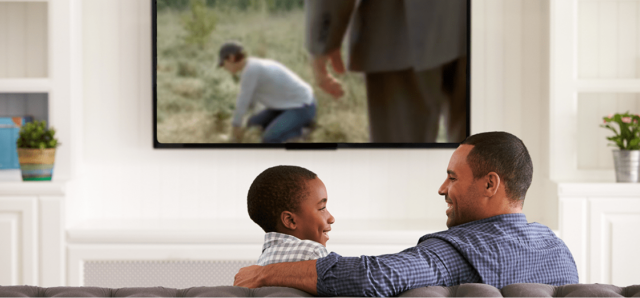 Why Watch TV With Your Tween or Teen
Viewing shows together and discussing content can have big benefits
Why Watch TV With Your Tween or Teen
Viewing shows together and discussing content can have big benefits
-
 Can Screen Time Be Educational for Toddlers?
How to choose media that's good for young children
Can Screen Time Be Educational for Toddlers?
How to choose media that's good for young children
-
 How Does Using Social Media Affect Teens?
Experts say kids are growing up with more anxiety and less self-esteem
How Does Using Social Media Affect Teens?
Experts say kids are growing up with more anxiety and less self-esteem
-
 Complete Guide to Substance Use + Mental Health
When children are struggling with both a substance use disorder and a mental health disorder,…
Complete Guide to Substance Use + Mental Health
When children are struggling with both a substance use disorder and a mental health disorder,…
-
 Top Children’s Books About Mental Health
Some of our favorite books for helping kids understand emotional and learning challenges
Top Children’s Books About Mental Health
Some of our favorite books for helping kids understand emotional and learning challenges
-
 Is Internet Addiction Real?
With kids spending more and more time on screens, parents worry that they are getting…
Is Internet Addiction Real?
With kids spending more and more time on screens, parents worry that they are getting…
-
 When Should You Get Your Kid a Phone?
It's not just a question of the right age
When Should You Get Your Kid a Phone?
It's not just a question of the right age
-
 Complete Guide to Managing Behavior Problems
When children struggle with their behavior, it can have a negative impact on everyone in…
Complete Guide to Managing Behavior Problems
When children struggle with their behavior, it can have a negative impact on everyone in…
-
 How Young Children’s Play Promotes Healthy Development
Play that's fun supports well-being and skill-building
How Young Children’s Play Promotes Healthy Development
Play that's fun supports well-being and skill-building
-
 Why Is It Important to Read to Your Child?
The benefits go far beyond literacy
Why Is It Important to Read to Your Child?
The benefits go far beyond literacy
-
 Helping Children Cope After a Traumatic Event
Tips for supporting children with trauma
Helping Children Cope After a Traumatic Event
Tips for supporting children with trauma
More Related