Understanding the Different Types of Psychological Evaluations
Diagnostic, psychoeducational, and neuropsychological: How to know which one your child needs and why
Clinical Experts: Larisa (Lara) Litvinov, PhD , Adam S. Zamora, PsyD
Key Takeaways
-
A diagnostic evaluation is useful for diagnosing mental health or neurodevelopmental disorders and starting treatment.
-
A psychoeducational evaluation can be used to determine if your child needs special accomodations from their school.
-
A neuropsychological exam is the most complete assessment of a child’s overall cognitive, psychological, and academic functioning.
If your child is struggling with mental health, behavior, or learning challenges, the first step to getting them the support they need is to seek a professional assessment. Whether you’ve been motivated to do so by the child’s teacher, the school, or your own concerns, there are several types of evalutations to choose from. And it can be hard to tell which one would be the best choice for your child.
There are three main types of evaluations: diagnostic, psychoeducational, and neurospychological.
A diagnostic evaluation is typically all you need for your child to receive a diagnosis of a mental health disorder and start a treatment plan.
A psychoeducational assessment is an evalution typically performed through a school’s Committee on Special Education (CSE) to see if a child qualifies for accommodations. This usually includes cognitive and academic testing, as well as social-emotional rating scales.
A neuropsychological evaluation is the most complete assessment of a child’s overall social-emotional, cognitive, academic, and neuropsychological functioning (including language, visual-motor, attention, executive functioning, and learning and memory skills). It’s especially useful for children with complex symptoms or learning challenges.
If you are looking to determine whether your child has a learning disorder, they’ll typically need either a full neuropsychological evaluation or one targeted for a specific learning disorder.
Preparation
For any of the three types of evaluations, it’s suggested that you do the following in advance:
- Gather documents: Before the first visit, you will need to collect any relevant health and behavior records for your child, which could include medical records, past evaluations, school reports, and developmental screenings conducted by the child’s pediatrician.
- Record observations: Take note of your child’s behaviors, especially when they seem atypical or out of character. Keep track of when they occur, as well as how frequently. This will be helpful for the evaluator to know.
- Bring snacks and water: Since these examinations take several hours, you and your child will most likely need to take breaks.
Diagnostic evaluation
What it is: A diagnostic evaluation is a focused assessment to determine whether your child meets the criteria for a specific mental health or neurodevelopmental disorder — including depression, anxiety, ADHD, or autism. For example, if your child struggles with intrusive thoughts that make them anxious and they develop rituals to keep their anxiety at bay, a mental health professional will most likely add specific testing for OCD to their evaluation.
Purpose: “Diagnostic evaluations are primarily the gateway for receiving treatment,” explains Adam Zamora, PhD, a senior neuropsychologist and director of the Gund Learning and Diagnostic Center at the Child Mind Institute. “We want to know what diagnostic criteria they meet to figure out which treatment would be best for that diagnosis.”
Qualified provider: Typically, the evaluation is conducted by a clinical psychologist, psychiatrist, or another qualified mental health professional.
Time commitment: The evaluation process is about 4 hours total. This includes an interview with parents that will take 1–2 hours, a one-hour session with the child, and a one-hour feedback session with the family.
Evaluation process:
- The clinician will collect information about your child’s developmental history as well as your family history. So they’ll usually speak to any previous treatment provider your child has had as well as their teacher, says Dr. Zamora. Then you’ll be interviewed, which can be done virtually.
- You will fill out questionnaires about your child’s daily habits and behaviors. And you’ll fill out a rating scale that will help to quantify your child’s symptoms and compare them to the norm. This can be helpful for balancing out the information received during the interview, says Dr. Zamora. “I’ve had some parents tell me that their kid has all these significant challenges. And then they fill out the rating scales and everything is within age expectation. Or it can be the other way around.”
- Then the child comes in for observation and evaluation. A parent could be present, depending on the situation, notes Lara Litvinov, PhD, a senior psychologist and director of the ADHD and Behavior Disorders Center at the Child Mind Institute. During this observation, the clinician will administer standardized assessments, which typically are tailored to their symptoms. For instance, if it’s thought that a child may have autism, they will be tested on their social communication skills and whether they show repetitive behaviors. The evaluator might observe if the child has difficulty maintaining eye contact as they talk, or see if they play with toys in the exact same way over and over again. If it’s thought that a child may have ADHD, the clinician will test their cognitive and executive functioning abilities. They might have the child solve puzzles or play memory games.
- Once the clinician has been able to review the information collected from the evaluation, there will be a feedback interview. Along with a diagnosis, the clinician will provide their recommendations for treatment. They will also suggest further testing if necessary.
Report: Shortly after the feedback interview, you will receive a formal written report of the evaluation results. This will consist of brief background information, a diagnosis, and recommendations.
Cost: Depending on the location, clinician experience, the specificity of testing, and insurance coverage, these evaluations can range from $300 to $4,000. Community health centers may offer lower rates, while a private practice with licensed psychologists or psychiatrists will charge more.
Drawbacks: While a diagnostic evaluation is good for starting treatment, it doesn’t provide an in-depth look at all aspects of your child’s brain functioning. If a child’s symptoms are complex, they’re thought to have a learning disorder, or they’re struggling with multiple mental health disorders, it may be more helpful to have a neuropsychological evaluation (see below). Typically, the evaluator will let you know if they think your child needs further assessment.
Psychoeducational evaluation
What it is: A psychoeducational evaluation determines if a student is eligible for special education or accomodations at school. It’s an assessment of their cognitive, academic, social, and emotional functioning compared to other children the same age. It also lets the school know the type of services the child will need.
Purpose: Children with mental health and learning disorders often need accommodations and services at school to have the same opportunities as children who don’t have these challenges. They could get this through an Individual Education Program (IEP) or a Section 504 plan. Since a school needs to determine that a student’s academic abilities are significantly impaired, an existing diagnosis may not be enough. Many schools require a psychoeducational assessment within a certain window of time after receiving a referral from a medical provider or a formal written request from you.
Qualified provider: This evaluation is conducted by a registered school psychologist.
Time commitment: The evaluation can take 4–6 hours in total. You and your child may be asked to come in for a whole school day or for separate sessions over the span of a few weeks. The testing can be stressful for the child, Dr. Litvinov explains, so it can be helpful to break it up into several sessions.
Evaluation process:
- In addition to the health records you provide, the psychologist will have asked your child’s teachers to complete a questionnaire about their learning and behavior.
- The psychologist will interview you about your child’s academic and developmental background, family history, and any concerns you have. You will likely be asked questions about how your child handles school assignments, what their academic strengths and weaknesses are, as well as notes you’ve received from their teachers. If your child is under 10, the examiner likely will ask you to fill out questionnaires about your child’s social-emotional and behavioral functioning.
- The psychologist will then evaluate your child for several hours. You won’t be permitted in the room with them, but you can wait outside.
What’s tested:
Cognitive functioning: These assessments often include verbal or visual tests to examine verbal and nonverbal reasoning, certain types of memory, and the speed at which your child processes and responds to information. They will also be asked to engage in problem-solving tasks.
Social and emotional functioning: The child’s parents and teachers will complete questionnaires to gauge their social and emotional functioning. Depending upon the child’s age, they may fill out their own questionnaires as well.
You will then have a feedback session with the psychologist. Depending on their age, your child can be included in this session. During this time, you will go over the results, which can identify your child’s learning strengths and challenges and recommended supports.
In some cases, the evaluation may also result in a formal diagnosis of a specific learning or language disorder, depending on the professional conducting the evaluation and state licensing requirements.
Report: Both you and the school will receive a written report that includes detailed results, and provide suggestions for accommodations and interventions needed. It will also say if your child is eligible for separate special education classes.
Cost: The evaluation is free if it is conducted by the school. You will only need to pay out of pocket if you seek a private assessment. This can cost between $1,000 and $6,000. Your insurance may cover some of it, depending on your provider.
Drawbacks:
Given its purpose, this evaluation focuses only on academic skills, learning, and how your child performs in school. In many states, including New York, a school psychologist can’t give a formal diagnosis, Dr. Zamora adds. A psychoed assessment may not be comprehensive enough to highlight all key challenges your child may be experiencing.
Additionally, there could be delays in getting an assessment due to a backlog in requests or a shortage in school psychologists. School officials could also refuse to provide one altogether if they determine your child is not qualified based on specified criteria.
Neuropsychological evaluation
What it is: A neuropsychological evaluation is the examination of a child’s overall social-emotional, cognitive, academic, and neuropsychological functioning — and how they affect each other. This is often recommended for children who have complex issues, where a diagnostic evaluation might be too narrow. It can be helpful for those with multiple mental health disorders, neurodevelopmental disorders such as autism and ADHD, learning disorders, or traumatic brain injury.
A neuropsychological exam takes several sessions, so it can provide a more complete, comprehensive picture of what might be going on. “We’re not just seeing one snapshot of a kid, but multiple snapshots,” Dr. Zamora explains. “And we’re sometimes looking to see if there is a very significant difference in how they’re performing on a Wednesday morning versus a Thursday afternoon, for example. So if you have a kid with ADHD or executive functioning challenges, they may seem okay one day. Then you test them on another day and they’re more inattentive or dysregulated, so you’re going to get a different presentation.”
Purpose: There can be several reasons for seeking this type of testing:
- Learning disability or school accomodations: Both neuropsychological and psychoeducational assessments can be used to get a child accomodations at school, Dr. Litvinov says. But a neuropsychological evaluation can reveal underlying or more nuanced weaknesses that a psychoed evaluation missed, determining the child’s need for accomodations. So if you are unsatisfied with the assessment your child received or if you are unable to get one from the school, a neuropsych evaluation can be useful.
- Complex symptoms: Sometimes a child displays challenges and behaviors that can relate to more than one mental health disorder. For instance, ADHD and anxiety can look similar in some children, so testing that covers a wider range of functioning may be needed to get to the bottom of the issues your child is dealing with — and identify the type of support they need. Trauma-related symptoms can also be difficult to pinpoint. “A lot of kids that I see have trauma. And there’s a lot of overlap of trauma symptoms and anxiety symptoms,” Dr. Litvinov explains. “You don’t want to be quick to judgment.”
- Ineffective treatment: In some cases, a child may have received a diagnosis and has been getting treatment for a while, but it isn’t working. “We want to see if there’s something that we’re missing,” Dr. Litvinov explains. “And with older kids, they might be reporting less, so parents might know less.”
- Flexibility: Sometimes, given cost and scheduling contraints, a family can request a more focused neuropsychological evaluation. “This looks like what I would call a beefier psychoed evaluation,” Dr. Zamora explains. “So if somebody came to us and was considering just testing for a learning disorder, I’d take a deeper dive into those academic areas to get a sense of which disorder it is. Is this actually dyslexia? Is it dysgraphia?” This evaluation usually takes 3–4 hours.
Qualified provider: This evaluation is typically conducted by a team of clinical psychologists, including a trained neuropsychologist.
Time commitment: The evaluation takes about 6–9 hours of testing in total, with 2–3 additional hours dedicated to interviews and a feedback session between you and the neuropsychologist. You and your child could be asked to come in for the whole day or separate sessions over the course of several days a week.
Evaluation process:
- The clinican will look at medical records, school reports, and any previous evaluations. They may also speak directly to your child’s teacher and ask them to fill out questionnaires regarding your child’s learning abilities and behavior.
- You will be interviewed about your child’s background, your family history, and concerns you have.
- Your child will then spend one-on-one time with the neuropsychologist, in which they will be interviewed and given a series of assessments that examine the following:
- Cognitive and intellectual abilities
- Short- and long-term memory and learning skills
- Executive functioning
- Speed and efficiency of processing
- Concentration and attention
- Language functioning
- Gross and fine motor skills
- Visual-spatial skills
- Emotional functioning
- Social skills and social language
- Academic functioning, including reading, writing, and math skills
Report: Afterward, you will receive a detailed written report that includes test results, interpretations, diagnoses, and recommendations. It can be used to support a request for a 504 plan or an IEP from your child’s school — and provide guidance to school staff on determining the right type of services for your child. The clinician may want to have a follow-up appointment to discuss the report and answer any questions you may have, but that is not always required.
Cost: Due to the time and depth of the evaluation, the cost of this testing can range from $1,500 to $10,000. While most evaluators may be out-of-network providers, there is a chance that a portion of this kind of evaluation may be covered by insurance.
Drawbacks: It can take a long time to schedule this test, as there is often a waiting list for child and adolescent neuropsychologists. This is also the most expensive examination out of the three.
Why knowing the difference is important
Dr. Litvinov emphasizes that it’s imperative that you’re aware of what each evaluation type entails. “I talk to parents whose child has received a diagnosic evaluation, and they’re frustrated or confused because they expected a detailed report that you typically get from a neuropsych evaluation,” she explains.
Some families wait months for a neuropsychological evaluation, not realizing that they can get treatment started for their child with a diagnostic evaluation or that a school can provide a free psychoeducational evaluation.
Understanding each type of evaluation will help you get your child the support they need.
Learn more about our Family Resource Center and our editorial mission.
References
The Child Mind Institute publishes articles based on extensive research and interviews with experts, including child and adolescent psychiatrists, clinical psychologists, clinical neuropsychologists, pediatricians, and learning specialists. Other sources include peer-reviewed studies, government agencies, medical associations, and the latest Diagnostic and Statistical Manual (DSM-5). Articles are reviewed for accuracy, and we link to sources and list references where applicable. You can learn more by reading our editorial mission.
-
Pham, Andy V., and Alexandra Riviere. 2015. “Specific Learning Disorders and ADHD: Current Issues in Diagnosis Across Clinical and Educational Settings.” Current Psychiatry Reports 17 (6).
https://doi.org/10.1007/s11920-015-0584-y. -
Sanfilippo, Joseph, Molly Ness, Yaacov Petscher, Leonard Rappaport, Barry Zuckerman, and Nadine Gaab. 2020. “Reintroducing Dyslexia: Early Identification and Implications for Pediatric Practice.” Pediatrics 146 (1).
https://doi.org/10.1542/peds.2019-3046. -
“Section 200.4 Procedures for Referral, Evaluation, IEP Development, Placement and Review.” New York State Education Department, last modified September 13, 2024,
https://www.nysed.gov/special-education/section-2004-procedures-referral-evaluation-iep-development-placement-and-review.

Was this article helpful?
Related Reading
-
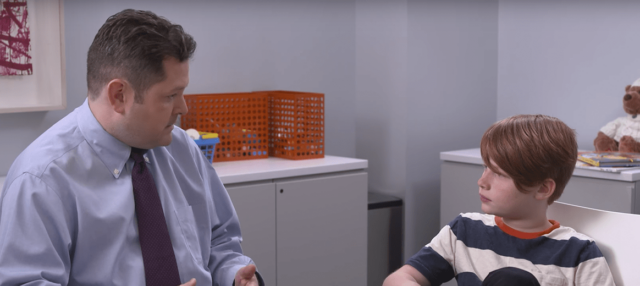 Inside an Evaluation for Learning Disorders
Dr. Matthew Cruger walks us through the process
-
 What Should an Evaluation for Autism Look Like?
From finding the right clinician to diagnostic tools and parent interviews, there are many steps
-
 Sharing an Autism Diagnosis With Family and Friends
Tips for explaining autism to family and close friends, to help them become effective allies
-
 Evaluations for Support at School
An evaluation can help you understand what kind of help your child needs. Getting an…
-
 Complete Guide to Getting Good Care
When a child is struggling, or their behavior worries you, it can be hard to…
-
 Assessing Nonverbal and Minimally Verbal Children
The importance of evaluations for kids who can't speak
-
 What Is Inattentive ADHD?
Kids don’t have to be hyperactive to have ADHD
-
 Building Positive Relationships With Students: What Brain Science Says
This article originally appeared on Understood.org Students’ brains are hard at work every moment of the…
-
 Complete Guide to Autism
Autism spectrum disorder (ASD) is called a spectrum because autistic kids may have a wide…
-
 Why Do Black Children With Autism Get Diagnosed Late?
Exploring the many barriers faced by Black parents who seek early intervention for their child
-
 Complete Guide to Developmental Milestones
A guide to normal childhood development that can help you recognize when your child might…