Internet gaming disorder is a term used for playing video games so much that it’s difficult to control and starts interfering with important parts of life. It’s included in the DSM-5 as a condition for further study, meaning experts are still debating exactly how it should be defined.
Video Game Addiction: What Is Internet Gaming Disorder?
Video Game Addiction: What Is Internet Gaming Disorder?
When a child's gaming is a problem and what to do about it
Clinical Experts: Dave Anderson, PhD , Douglas Gentile, PhD
Key Takeaways
-
A kid who loves video games isn’t necessarily addicted — the bigger concern is whether gaming is crowding out sleep, school, friendships, or other important parts of life.
-
Excessive gaming is often linked to underlying challenges such as ADHD, anxiety, depression, or social struggles that may also need support.
-
Setting reasonable boundaries around gaming is usually more effective than banning it altogether.
Every night, getting her 16-year-old son Ben to go to bed was a battle Karla would dread. He played video games online in the evening for hours, chatting with friends on his headset. As the time got late and she reminded him it was bedtime, inevitably he’d be in the middle of some campaign and wouldn’t stop. All his friends were still playing together, Ben would argue, and he would miss out.
It’s a classic disagreement in families: Parents are worried that their kids have a video game addiction — they’re unable to limit their time spent playing — and kids think their parents are overreacting. Who’s right?
The jury is still out. While researchers and clinicians acknowledge that gaming has addictive qualities, what constitutes a disorder and how to recognize the signs are still up for debate.
Why parents worry about video game addiction
“There are lots of reasons why parents don’t like video games,” says Dave Anderson, PhD, a clinical psychologist who treats teens at the Child Mind Institute. “They’ll say kids spend too much time playing, and they’re not spending enough time on schoolwork. The video games are violent and contain sexualized content. They’re playing the game online with their friends, and in the chat, they seem to be saying inappropriate things.”
For many kids, video games are a place for entertainment and social connection — it’s fun and something to do with friends. Problems arise when parents need them to stop. “A lot of parents will say it leads to major conflicts when we’re asking them to stop playing video games,” Dr. Anderson says. “But that does not necessarily mean the kid has a gaming disorder.”
What is internet gaming disorder?
While parents might call it “video game addiction,” it’s called “internet gaming disorder” in the official Diagnostic and Statistical Manual of Mental Disorders (DSM-5). Internet gaming disorder is not a fully recognized disorder in the most recent edition of the DSM-5. Since 2013, it has been provisional, categorized as a condition for further study, underscoring the lack of clear consensus on whether it should be a standalone disorder, even as concerns mount about the mental health effects of video games and internet use generally.
The DSM-5 proposes that someone could have internet gaming disorder if they experience at least five of the following over a 12-month period:
- Preoccupation with video games where it becomes the dominant activity in daily life
- Withdrawal symptoms such as irritability, anxiety, or sadness when games are taken away
- Needing to spend increasing amounts of time playing video games
- Has made unsuccessful attempts to control how much time they spend playing games
- Loss of interest in other hobbies
- Has continued game-playing despite being aware that it’s causing problems in their life
- Has lied to others about how much they are playing video games
- Uses gaming to escape or relieve a negative mood
- Has jeopardized or lost a significant relationship, job, or educational opportunity because of gaming
While gaming disorder hasn’t yet been accepted as an official disorder in the United States, the World Health Organization (WHO) adopted it in their standard classification in 2019, and it went into effect in 2022. The criteria are simpler in what’s called the International Classification of Diseases (ICD-11). By the ICD-11 definition, someone has a gaming disorder if they fit at least two of the following over a 12-month period:
- Impaired control over gaming (e.g., onset, frequency, intensity)
- Increased priority given to gaming so that it takes precedence over other life interests and daily activities
- Continuation or escalation of gaming despite negative consequences
Some researchers argue that the simpler ICD-11 definition, with its focus on how gaming negatively affects other aspects of life, is better at capturing when gaming is truly a problem. Kids who use gaming as an escape when they are unhappy might get labeled with internet gaming disorder according to the DSM-5, for example, so clinicians are concerned about risks of overdiagnosis. While there is growing recognition that excessive gaming can be harmful, experts are still studying whether it is an addictive disorder.
Internet gaming disorder and other diagnoses
Dr. Anderson notes that gaming disorder rarely occurs without other disorders, such as ADHD, depression, or social anxiety. “Most of the time we see problematic gaming, it is co-occurring with something else, like ADHD,” he says. “Or they might be on the autism spectrum, and having a hard time making friends, so gaming becomes a kind of retreat. Or they’re depressed, and they feel like other activities aren’t necessarily going to be that rewarding. So they turn to gaming.”
But that doesn’t mean that it isn’t important to take it seriously. Douglas Gentile, PhD, a professor of psychology at Iowa State University who researches the effects of video games and media, notes that several disorders occurring together isn’t unusual. “In fact comorbidity is the norm, not the exception, in mental health,” he says. And he adds that his own research has found evidence that problematic gaming can lead to or exacerbate depression.
“Let’s say there’s a kid who’s not doing well in school, doesn’t have a lot of friends and gets depressed,” he hypothesizes. “So he goes home and he plays games as a way of relieving the stress of that. And that, of course, doesn’t help him make new friends, and it doesn’t help his grades. So he doesn’t get better at those. So he gets more depressed, so he plays more games, so he gets more depressed, right? At some point, the gaming can become a problem on its own.”
Dr. Gentile stresses that it’s valuable for pediatricians, clinicians, and counselors to ask about gaming habits along with other mental health concerns. That’s why he hopes gaming disorder will be recognized as a full disorder in the next edition of the DSM: “We will start remembering, oh, we should ask about this, too, because it often does co-occur with ADHD, depression, anxiety, social phobia, poor school performance, aggression.”
How to tell when gaming is a problem
When a family is concerned about excessive time spent playing video games, Dr. Anderson will ask families for information:
- How much time does your child spend gaming?
- How does it impair their functioning and academic performance?
- How does it affect their sleep?
- How does it lead to conflict?
- What other diagnoses do they have?
Dr. Anderson is cautious about making the diagnosis of gaming disorder if he thinks there’s an underlying condition, because treating that underlying condition might mean the problematic gaming will resolve as well.
“If I think a kid’s depressed and they’re also gaming too much, I am going to make sure that I emphasize the treatment for depression,” Dr. Anderson says. “Because treatment for depression involves behavioral activation — getting the kid involved in certain activities in life, boosting their mood with that kind of that involvement and social support — which is antithetical to the gaming. So that would treat the downstream problem of gaming.”
Treatment for internet gaming disorder
Treatment for internet gaming disorder usually involves cognitive behavioral therapy (CBT), including emotion regulation training skills, which can help people face their problems in life if they’ve been using gaming as an escape. Clinicians also may use motivational interviewing and family-based therapy.
Dr. Gentile has seen programs where family involvement seems to make a difference. One theory, he says, is that kids play video games because it satisfies the deep human need for autonomy, belonging, and competence: They are in control, play with friends, and are good at it.
“If you’re not getting these needs met in real life but you’re getting them met by playing games, you’re more motivated to keep doing the games,” Dr. Gentile says. So the program works with families to get those needs filled with real-life activities, like learning to fish or joining a sports team. Parents also sit down and learn to play video games alongside their child, so they better understand why the kid likes it so much — and that creates a bridge to help improve communication.
Setting boundaries on gaming
While some parents want kids to stop gaming entirely, Dr. Anderson advises against that in most cases. “There are a lot of kids who see themselves as gamers — it’s a part of their identity,” he says. Instead, he encourages parents to place reasonable boundaries on gaming so that their child is investing enough time in four main areas: academics, extracurricular activities, face-to-face time with friends, and sleep.
“This is the thing we’re trying to collaboratively problem solve for,” Dr. Anderson says. “How do we get it so that you complete your homework, you have at least one activity you’re invested in — whether you play an instrument or a sport, or you’re in the school play. You’re spending time with friends in person, and you’re getting enough sleep.” When those are in place, then families can test out having the child engage in a moderate amount of gaming. “Time spent on games is a want, not a need. It’s earned,” he says.
Kids will push back on restrictions, of course. “That just means that we might need more of a behavioral approach — how they earn video game playing time, or think more about the consequences if they, for example, break the controller when they come off of it,” Dr. Anderson says.
“The complaints we hear from kids are, ‘My friends are on at different times. You’re making it so I can’t connect to my friends,’” he says. “And we’ll say, ‘Look, we’re willing to make a reasonable accommodation to try to figure out how you can be on with your friends at the right time. We need these other things that are best for your development. We can then negotiate about when gaming happens.’”
Tips to limit video games
To enforce limits on gaming, Dr. Anderson coaches parents on how to make sure games aren’t available except during the designated times. With younger kids, games are usually played on devices like an iPad that can be taken away. The difficulty in setting boundaries, he says, “usually involves an ‘extinction burst,’ which is the idea that if you’ve got a kid who throws tantrums, their tantrums are going to get worse before they get better when we set boundaries.” He helps parents make a plan to maintain everyone’s safety to get past these behaviors, and he works with the child to learn emotion regulation skills to use when they have to stop doing an activity they enjoy.
But older kids need computers to do schoolwork, so limiting access to games is more difficult. To control cellphone use, he suggests setting screen time limits or blocking apps by using a device like Brick. To control access to video game consoles or computers, parents can remove the power cord.
With kids of all ages, families work on reducing conflict by making access to games something that is predictable and available as long as their other essential developmental needs are fulfilled.
“I want parents to realize that all of those symptoms in youth don’t happen in isolation,” Dr. Anderson says. “Even if you think your child has internet gaming disorder, frequently what we want is a comprehensive diagnostic evaluation to be sure there’s not something else treatable that’s underlying this behavior. Then we can then restore a bit of balance to life and make it so that gaming is not the major activity this kid’s engaging in.”
Frequently Asked Questions
Experts agree that excessive gaming can become problematic for some kids and adults, but there is still debate about whether it should be categorized as an addiction disorder.
Warning signs include being unable to cut back on gaming, losing interest in other activities, becoming upset when gaming is restricted, and continuing to play despite negative consequences. Gaming can also start affecting sleep, school performance, friendships, or family relationships.
Clinicians look at whether gaming has become hard to control and whether it is causing significant problems in daily life over an extended period of time. They also consider factors like sleep, school performance, family conflict, and whether conditions such as ADHD, anxiety, or depression may be contributing to the behavior.
Last reviewed or updated on October 22, 2026.
Learn more about our Family Resource Center and our editorial mission.
References
The Child Mind Institute publishes articles based on extensive research and interviews with experts, including child and adolescent psychiatrists, clinical psychologists, clinical neuropsychologists, pediatricians, and learning specialists. Other sources include peer-reviewed studies, government agencies, medical associations, and the latest Diagnostic and Statistical Manual (DSM-5). Articles are reviewed for accuracy, and we link to sources and list references where applicable. You can learn more by reading our editorial mission.
-
Castro-Calvo, Jesús, Daniel L. King, Dan J. Stein, et al. “Expert Appraisal of Criteria for Assessing Gaming Disorder: An International Delphi Study.” Addiction 116, no. 9 (2021): 2463–2475.
https://doi.org/10.1111/add.15411 -
Gentile, Douglas A., Kira Bailey, Daphne Bavelier, et al. “Internet Gaming Disorder in Children and Adolescents.” Pediatrics140, Suppl 2 (2017): S81–S85.
https://doi.org/10.1542/peds.2016-1758H -
Gentile, Douglas A., Choo, H., Liau, A., Sim, T., Li, D., Fung, D., & Khoo, A. “Pathological Video Game Use Among Youths: A Two-Year Longitudinal Study.” Pediatrics 127, no. 2 (2011): e319–e329.
https://doi.org/10.1542/peds.2010-1353 -
Harpas, Inessa, Matthew Stevens, Marcela Radunz , Paul Williamson, Toshitaka Hamamura , Oscar Svendsen, and Daniel L. King. “Treatment of Gaming Disorder: A Systematic Review and Meta-Analysis.” Psychiatry Research 354 (2025): 116783.
https://doi.org/10.1016/j.psychres.2025.116783 -
King, Daniel L., Samuel R. Chamberlain, Natacha Carragher, et al. “Screening and Assessment Tools for Gaming Disorder: A Comprehensive Systematic Review.” Clinical Psychology Review, 77 (2020): 101831.
https://doi.org/10.1016/j.cpr.2020.101831
Topics

Michelle Shih
Michelle Shih
Michelle Shih is the editorial director of the Child Mind Institute, where she writes and edits articles and develops resources … Read Bio
Was this article helpful?
Related Reading
-
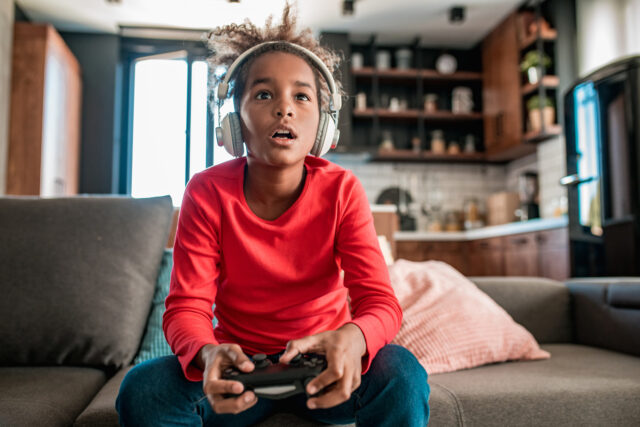 Healthy Limits on Video Games
How to prevent (or overcome) problems with gaming
Healthy Limits on Video Games
How to prevent (or overcome) problems with gaming
-
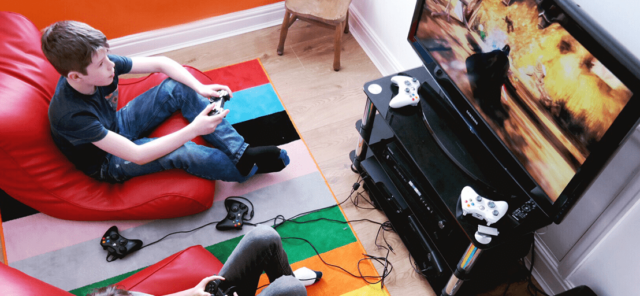 Do Video Games Cause ADHD?
Why kids with attention problems are so focused — even fixated — on the screen
Do Video Games Cause ADHD?
Why kids with attention problems are so focused — even fixated — on the screen
-
 Complete Guide to Substance Use + Mental Health
When children are struggling with both a substance use disorder and a mental health disorder,…
Complete Guide to Substance Use + Mental Health
When children are struggling with both a substance use disorder and a mental health disorder,…
-
 A Parent’s Guide to Dealing With Fortnite
Understanding the appeal and setting boundaries
A Parent’s Guide to Dealing With Fortnite
Understanding the appeal and setting boundaries
-
 Teens and Online Gambling
What to know and how to talk to kids about the risks
Teens and Online Gambling
What to know and how to talk to kids about the risks
-
 What Is Kratom: A ‘Natural’ Drug That’s Dangerously Addictive
And a new synthetic form called 7-OH is stronger and even more addictive
What Is Kratom: A ‘Natural’ Drug That’s Dangerously Addictive
And a new synthetic form called 7-OH is stronger and even more addictive
-
 Is Internet Addiction Real?
With kids spending more and more time on screens, parents worry that they are getting…
Is Internet Addiction Real?
With kids spending more and more time on screens, parents worry that they are getting…
-
 When Should You Get Your Kid a Phone?
It's not just a question of the right age
When Should You Get Your Kid a Phone?
It's not just a question of the right age
-
 Neurodivergent Kids and Screen Time
Embracing the benefits while building a balance
Neurodivergent Kids and Screen Time
Embracing the benefits while building a balance
-
 BPD vs Bipolar: Why They Are Often Confused
How to distinguish borderline personality disorder from bipolar disorder in teens
BPD vs Bipolar: Why They Are Often Confused
How to distinguish borderline personality disorder from bipolar disorder in teens
More Related