Applied Digital Technologies
Center for Product Development
Building evidence-based digital solutions to accelerate the pace of scientific discovery and innovation in children’s mental health.
Our Process
Standard methods for assessment and treatment of mental health disorders are antiquated, lacking in reproducibility, and administered in an unnatural clinical setting — all of which can result in an inaccurate view of a child’s condition. Our team is focused on ways that new technologies can collect more accurate, quantifiable data and provide better access to quality care for children and families worldwide.
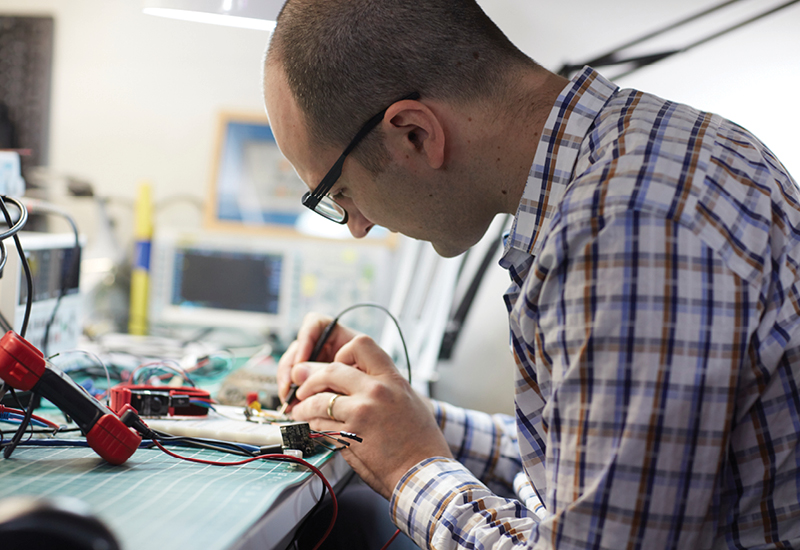
Grounded in research and demonstrable impact, our product development process aims to change the way healthcare technology is built. Researchers, engineers, and clinicians work across disciplines to create digital tools with clinical validation, while our robust data science center facilitates the collection and aggregate analysis of participant data for more reliable and reproducible outcomes.
Products in Development
We are currently pursuing numerous tools as part of the Next Generation Digital Therapeutics partnership with the State of California. These priorities are based on years of research into the types of digital solutions that would have the greatest impact.
Curious
Curious is a no-code digital platform that bridges the gap between scientific discovery and everyday health. Researchers and clinicians can quickly design and deploy assessments, interventions, cognitive tasks, and more — making validated tools accessible to everyone who needs them.

Mirror: AI-enhanced journaling
Mirror is a clinically informed journaling app designed to provide teens and young adults a safe, private space for self-reflection. Through clinician-designed prompts, AI-driven insights, and mood tracking, our mission is to help young people build resilience and feel more in control of their emotional well-being.

Kandoo: AR-enhanced behavioral activation
Our work combines the evidence-based approach of Brief Behavioral Activation with augmented reality and interactive gameplay to make treatment engaging for teenagers. Through reinforcement mechanics, augmented reality, and map-based gameplay, we are learning how patients can reduce their depression symptoms and do more of what matters most to them.

Innovative AI approaches
We are applying state-of-the-art AI approaches across numerous domains. By extracting meaningful information for clinicians from the various data we collect — photos, videos, biometrics, surveys, voice, and more — objective evidence of their patients' day-to-day mental health status emerges. Leveraging large language models (LLMs) may reduce bottlenecks in clinical report writing, improve diagnostic consistency, and facilitate tailored support for participants with mental health conditions.

Featured News
Our Team







Science Today for Better Care Tomorrow
Learn more about our science team’s other initiatives
About Our Science
Across six interconnected focus areas, our scientists build foundational knowledge of the developing brain, generate better tools for discovery, and more.

Healthy Brain Network
The goal of the Healthy Brain Network is bold: to find biological markers of childhood mental health and learning disorders.
On the Shoulders of Giants Scientific Symposium
An annual celebration of scientific collaboration and breakthroughs in our understanding of the brain.

Autism Center: Research Lab
Our research is focused on understanding the neurobiology of autism spectrum disorder using brain imaging and a range of other clinical and cognitive approaches.